1900 2039 – Ext: 429
 qtkd@ntt.edu.vn

 English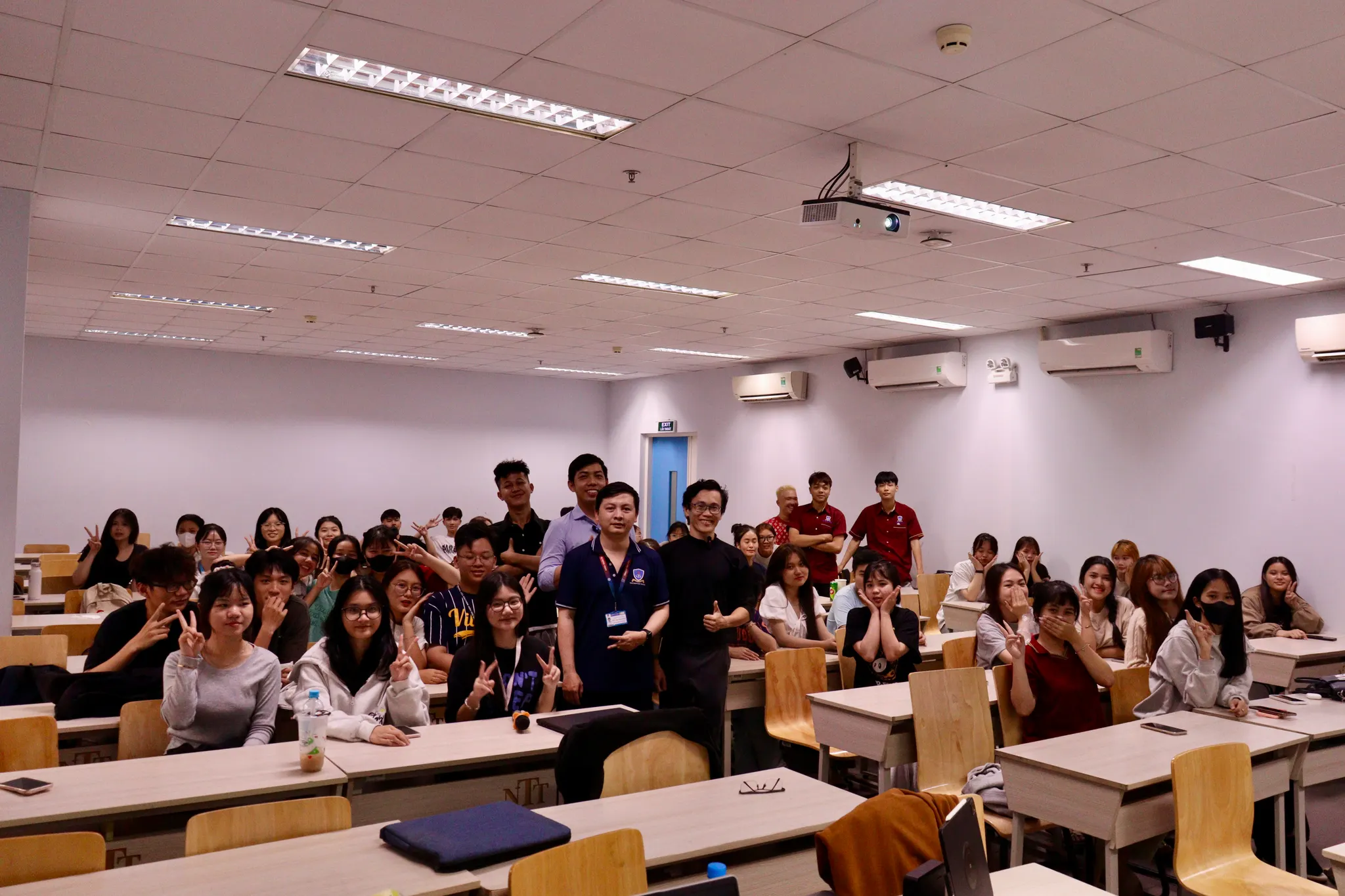
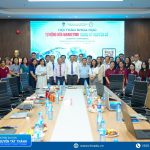
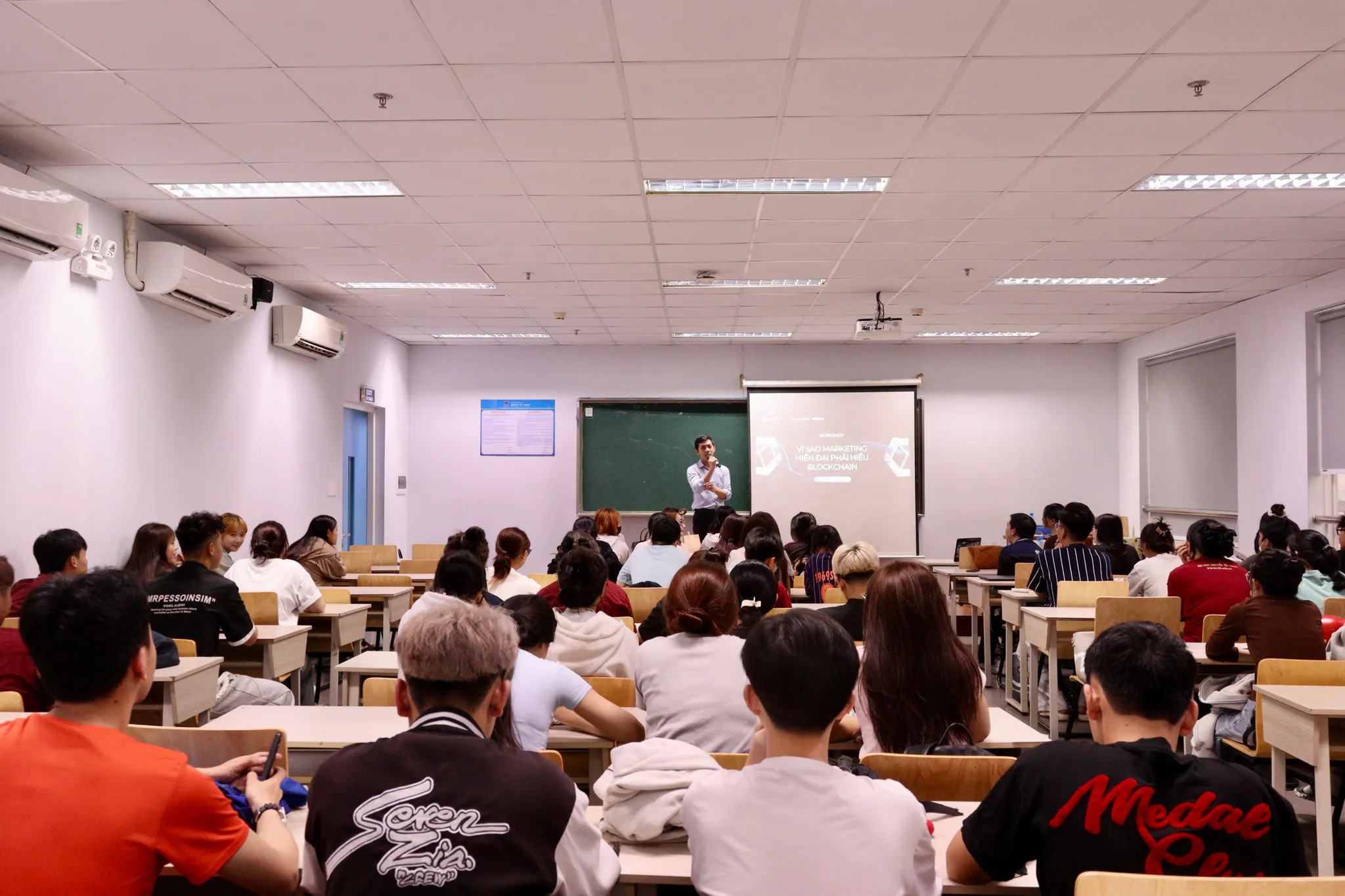
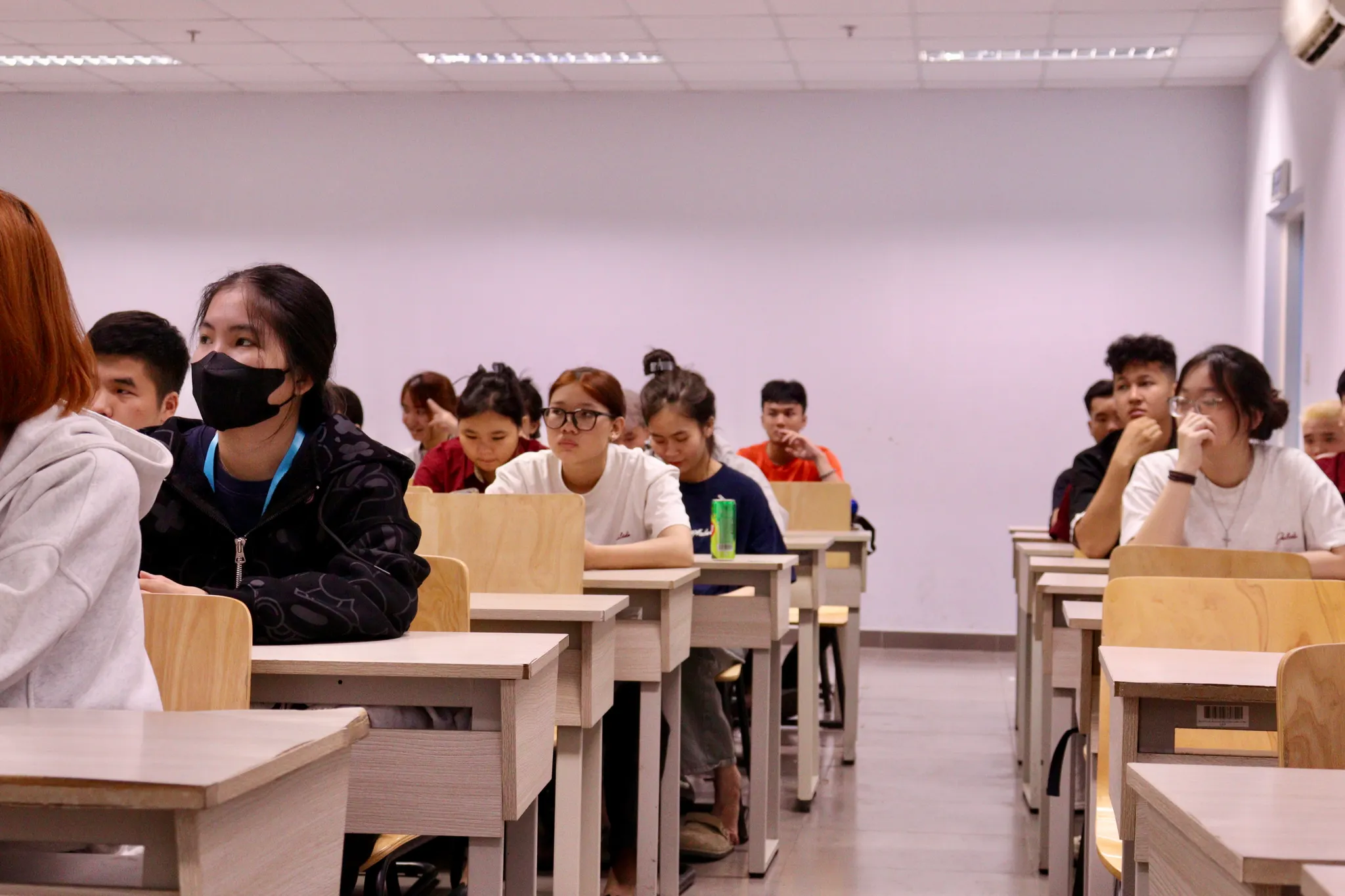
On the afternoon of December 18, 2025 , the Faculty of Business Administration – Nguyen Tat Thanh University organized a career orientation session on the topic “Building dApps easily with no-code – from idea to actual product” , for students majoring in Digital Economics and Marketing . The program received significant interest and active participation from over 100 students , creating a lively exchange of ideas surrounding new technology trends such as Blockchain and AI in the context of current digital transformation.
The orientation session was designed to provide students with a practical and accurate understanding of Blockchain in the fields of Marketing, Digital Economy, and E-commerce , through an accessible approach that progresses from fundamental concepts to simple case studies . Simultaneously, the program helped students better understand how AI and no-code/low-code tools can support the rapid realization of product ideas – even for economics students without a programming background.
The program included guest speakers from the Future Re:boot education project, including:
- Sang– Founder of Vcoincheck , a Blockchain expert with over 5 years of experience , is one of the pioneers in the Cardano ecosystem and is currently the founder of the Cardano Vietnam Community .
- Dat – a Social Media Marketingexpert with over 10 years of experience , is currently the CEO of GADiAC Asia (Social Media Marketing & Media Production), and also the CEO of Zimmon AI – a platform for personalizing video content using AI with just one click.
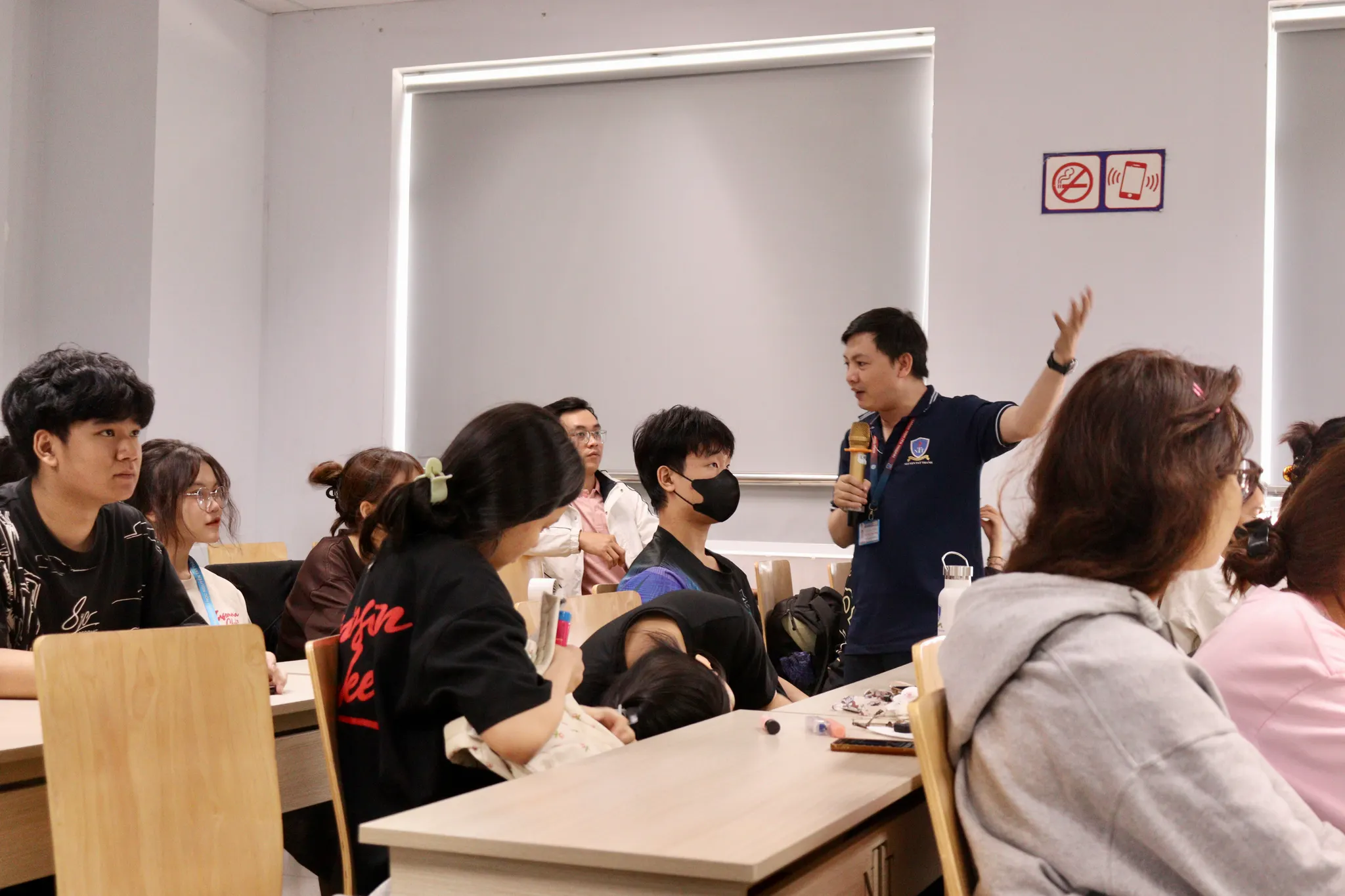
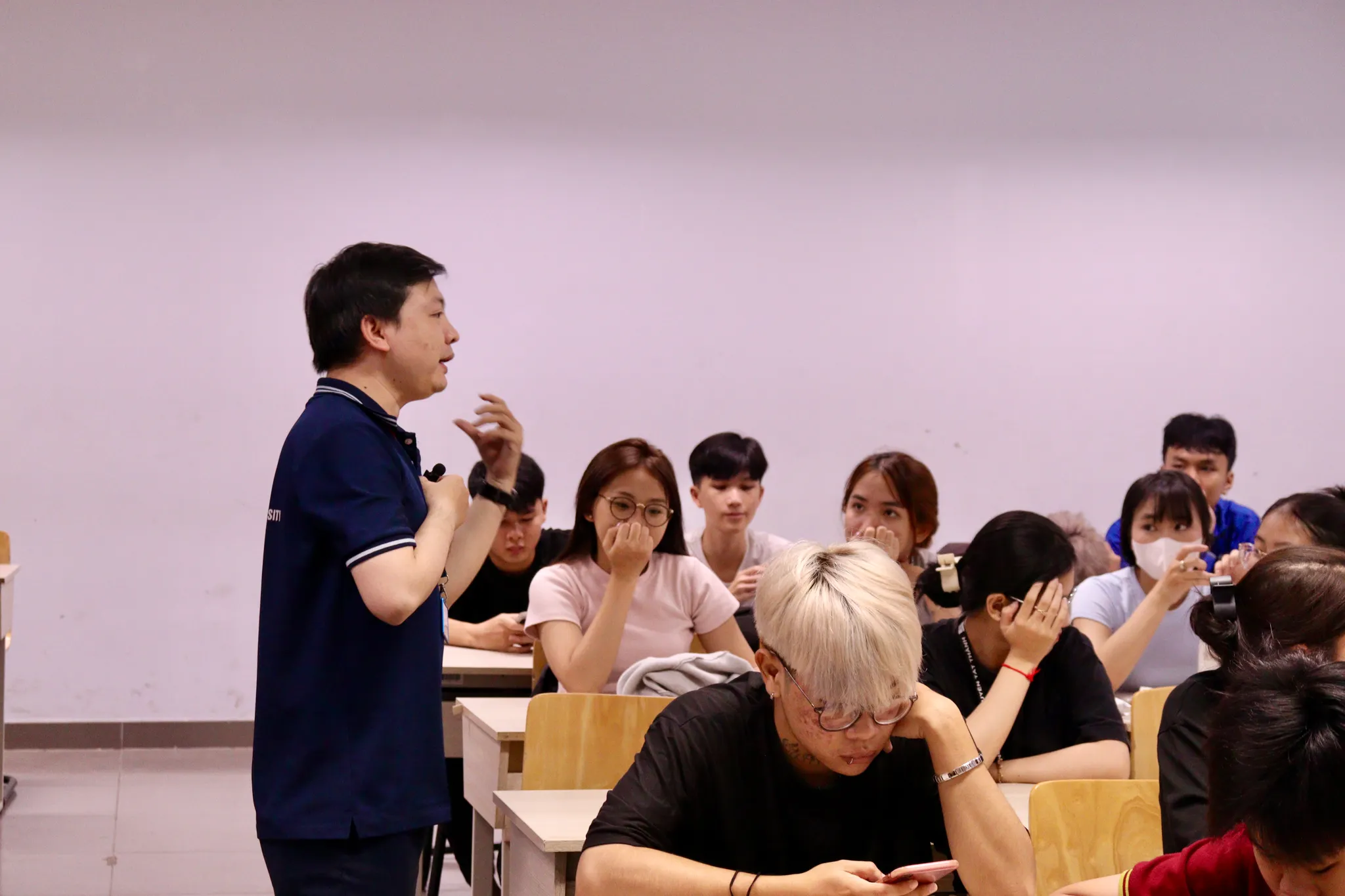
MSc. Tran Thanh Tung explained how students could connect their current learning knowledge with the speaker’s content more deeply.
On the Faculty’s side, the program is directly supported by Mr. Tran Thanh Tung, Deputy Head of the Digital Economics Department and Academic Advisor for classes 25DKTS1A and 25DMK1A . The orientation session is held during the lecturers’ monthly regular academic advisor meetings, aiming to create a foundation of awareness and inspire students to proactively seize future career opportunities.
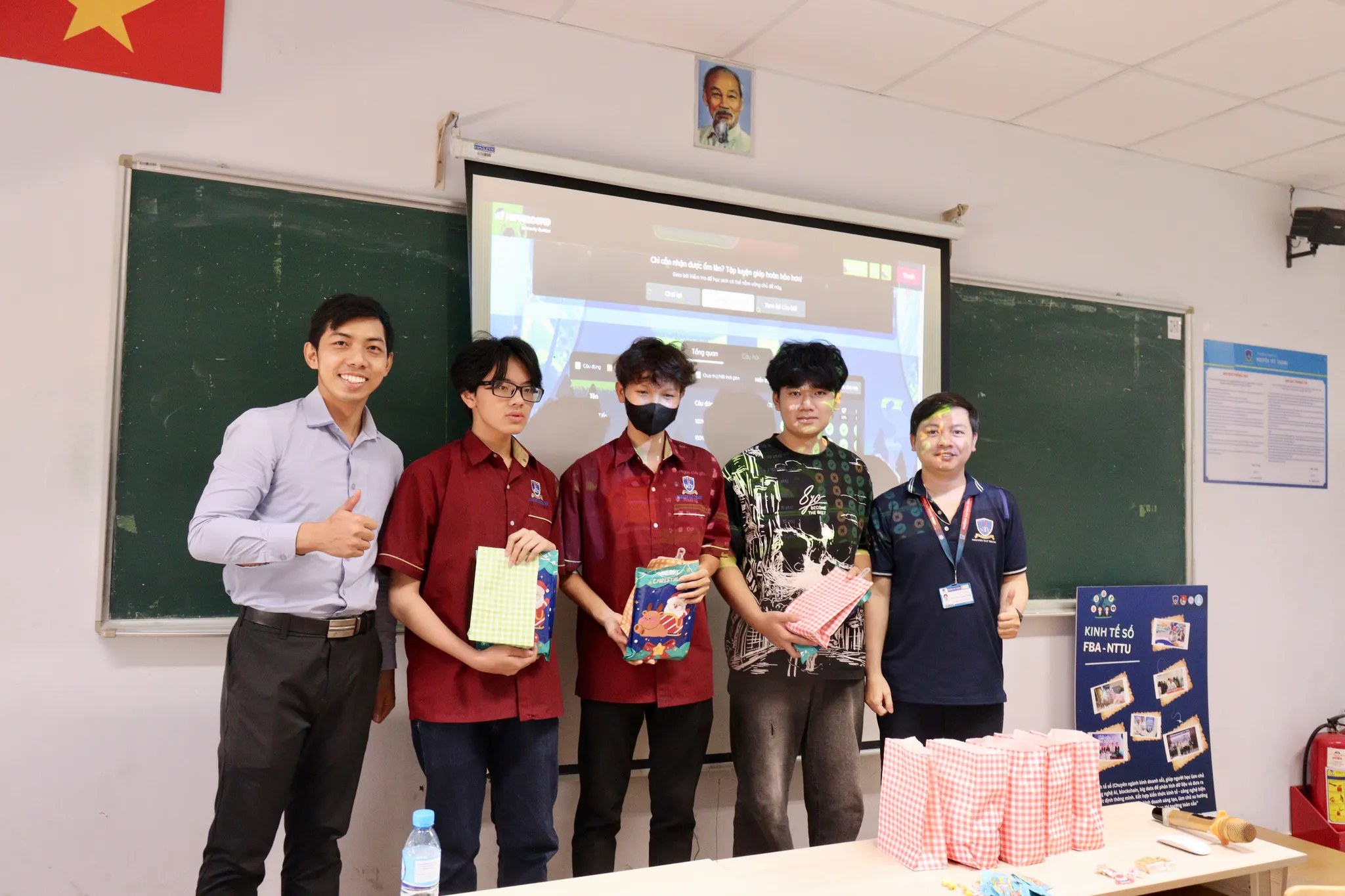
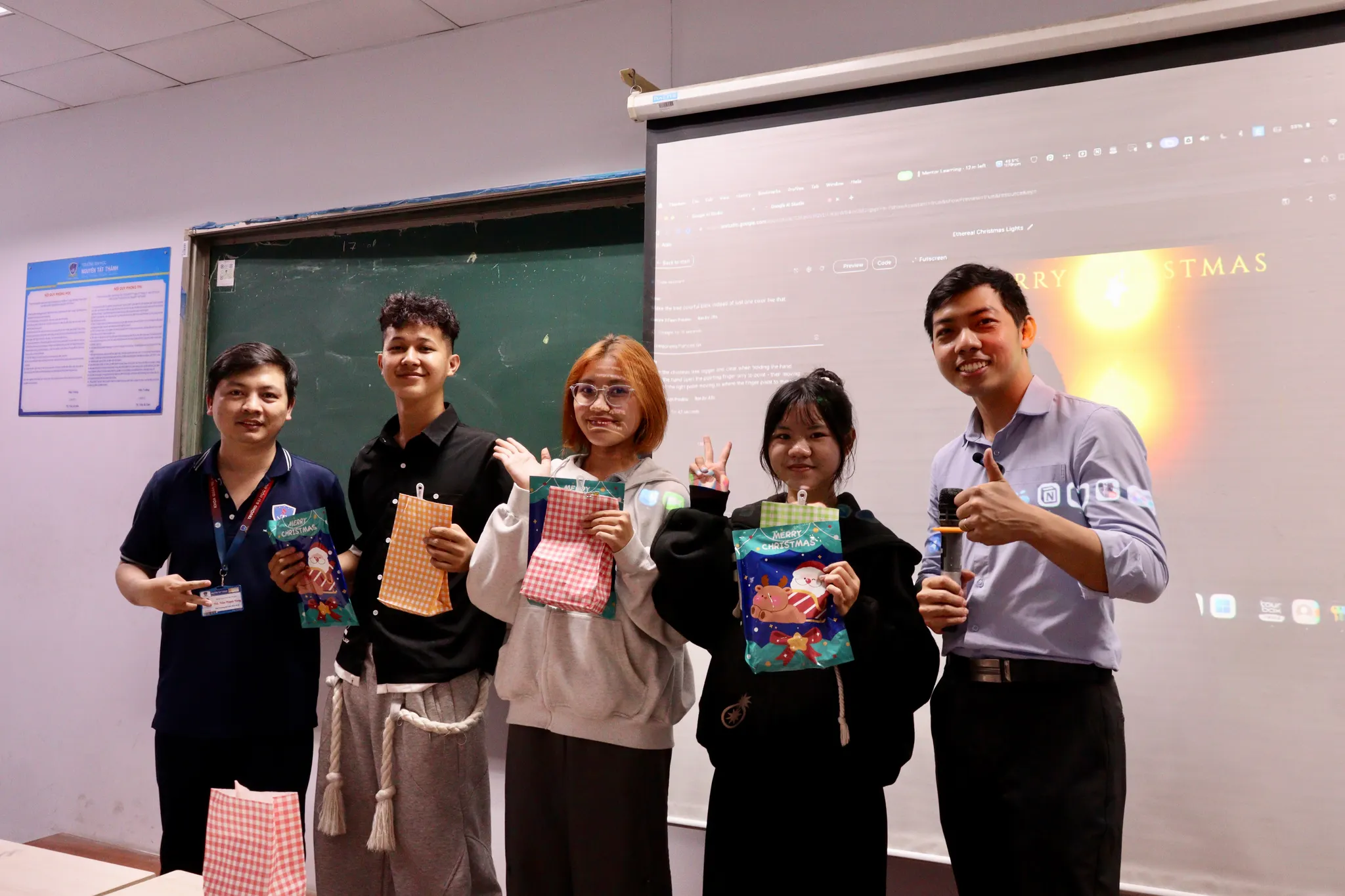
Program opening: Right orientation – correct understanding – real action.
Opening the orientation session, Mr. Tran Thanh Tung introduced the speakers, the main content of the program, and the goals of the sharing session. In the spirit of “learning by doing,” the program focuses on helping students not only understand technology at a conceptual level, but also approach it in a practical way – easily understandable and applicable , avoiding confusion with unverified information in the media.
Part 1: Blockchain through an easy-to-understand and relevant lens.
In the first part of the presentation, the speakers focused on explaining the most fundamental concepts of Blockchain, most notably:
- Blockchain acts as a transparent and verifiable “ledger” .
- Smart contracts, like “automated contracts,” help run processes without the need for intermediaries.
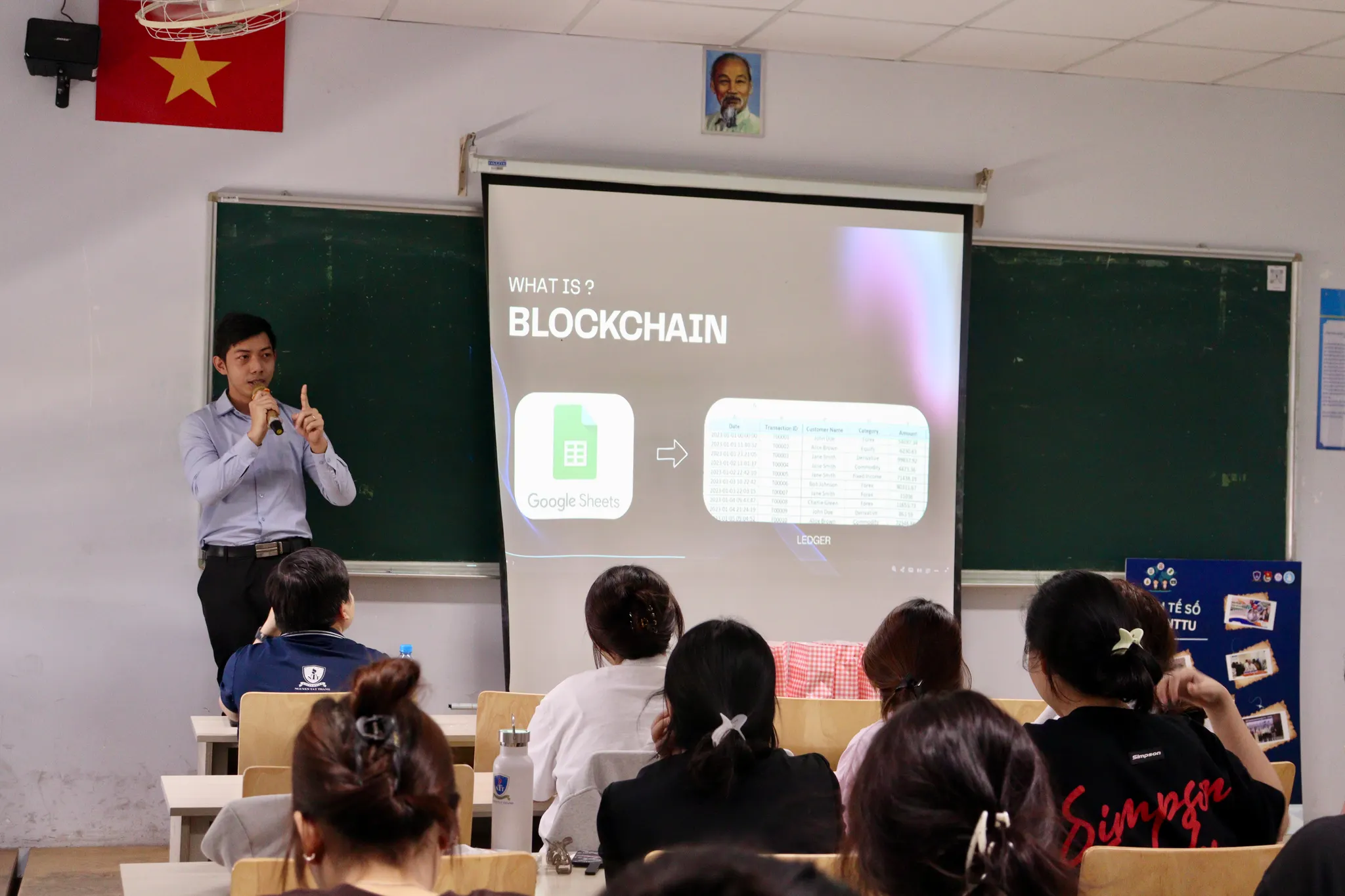
Mr. Sang explains the “ledger” in blockchain.
Through examples and case studies relevant to Marketing, Digital Economy, and E-commerce , students can see how Blockchain can be applied to activities such as building trust in transactions, ensuring data transparency, managing processes, implementing customer loyalty programs, or creating new interactive experiences in communication campaigns.
Besides highlighting how some brands have applied Blockchain in their campaigns, the presentation also suggests application concepts/ideas so that students can develop their own career paths according to their majors, thereby transforming technology into a tool to serve business problems – instead of just a trend.
Part 2: From Idea to dApp in Minutes with No Code and AI
In the second part, students are introduced to the methods, tools, and mindset for building a dApp using natural language , following a no-code/low-code/vibe-code approach – suitable for economics students and not requiring programming skills or a technical team.
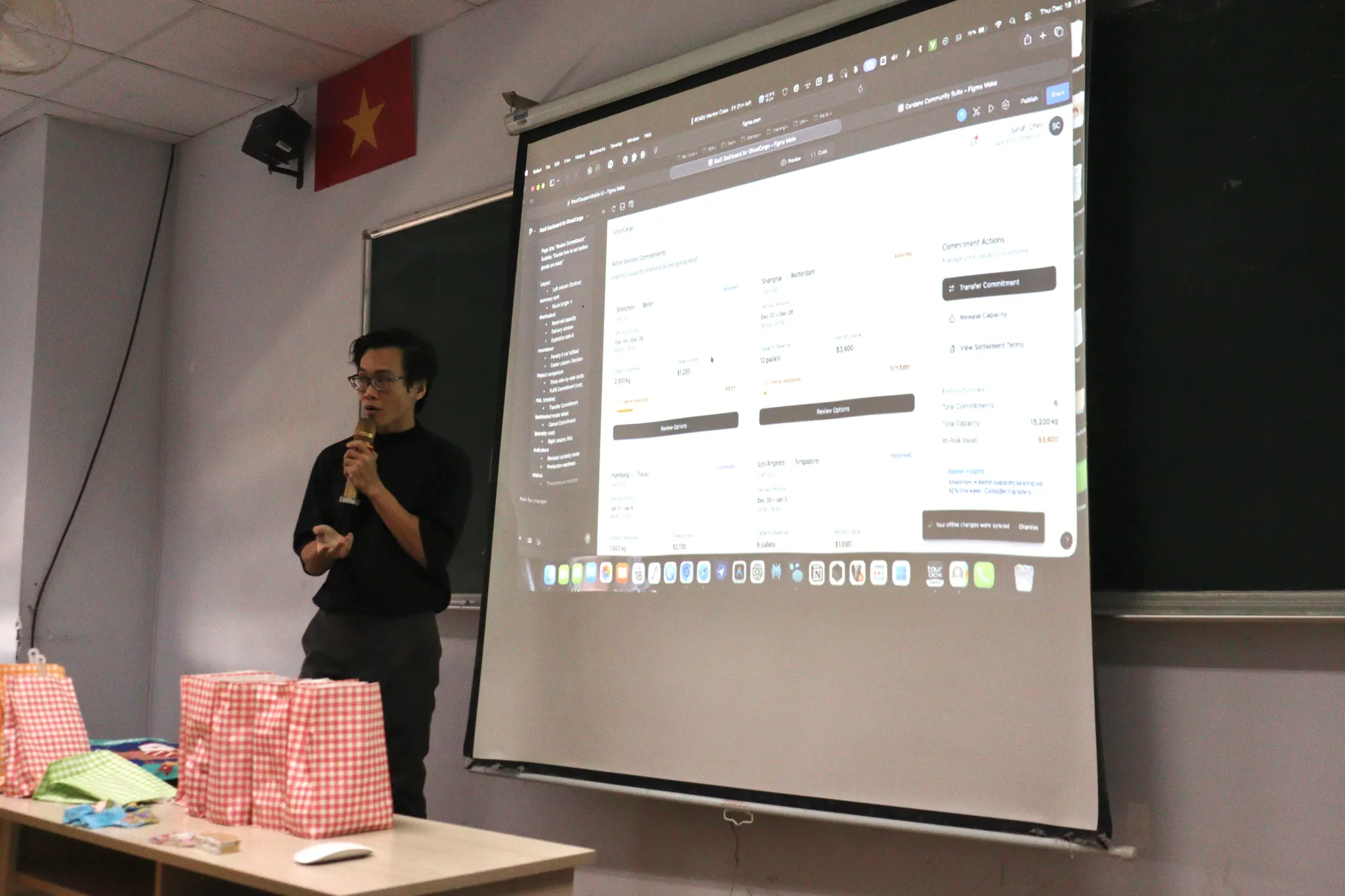
Students gain experience in rapidly building applications with Figma Make AI to create a blockchain-based logistics management platform.
Under direct guidance, students had the opportunity to practice hands-on with tools such as Google AI Studio and Figma right in the morning . In just a few minutes, they were able to:
- Developing application ideas,
- Describe the requirements using natural language.
- Build the user interface and interaction flow.
- And most importantly, it allows direct interaction with the newly created application immediately.
In his presentation to help students familiarize themselves with their respective fields, Mr. Dat also introduced many creative applications directly related to their studies, notably interactive landing page/mini-game ideas for marketing campaigns, including interactive experiences using hand gestures via the camera on computers/phones – opening up a way to implement them quickly, intuitively, and engagingly for users.
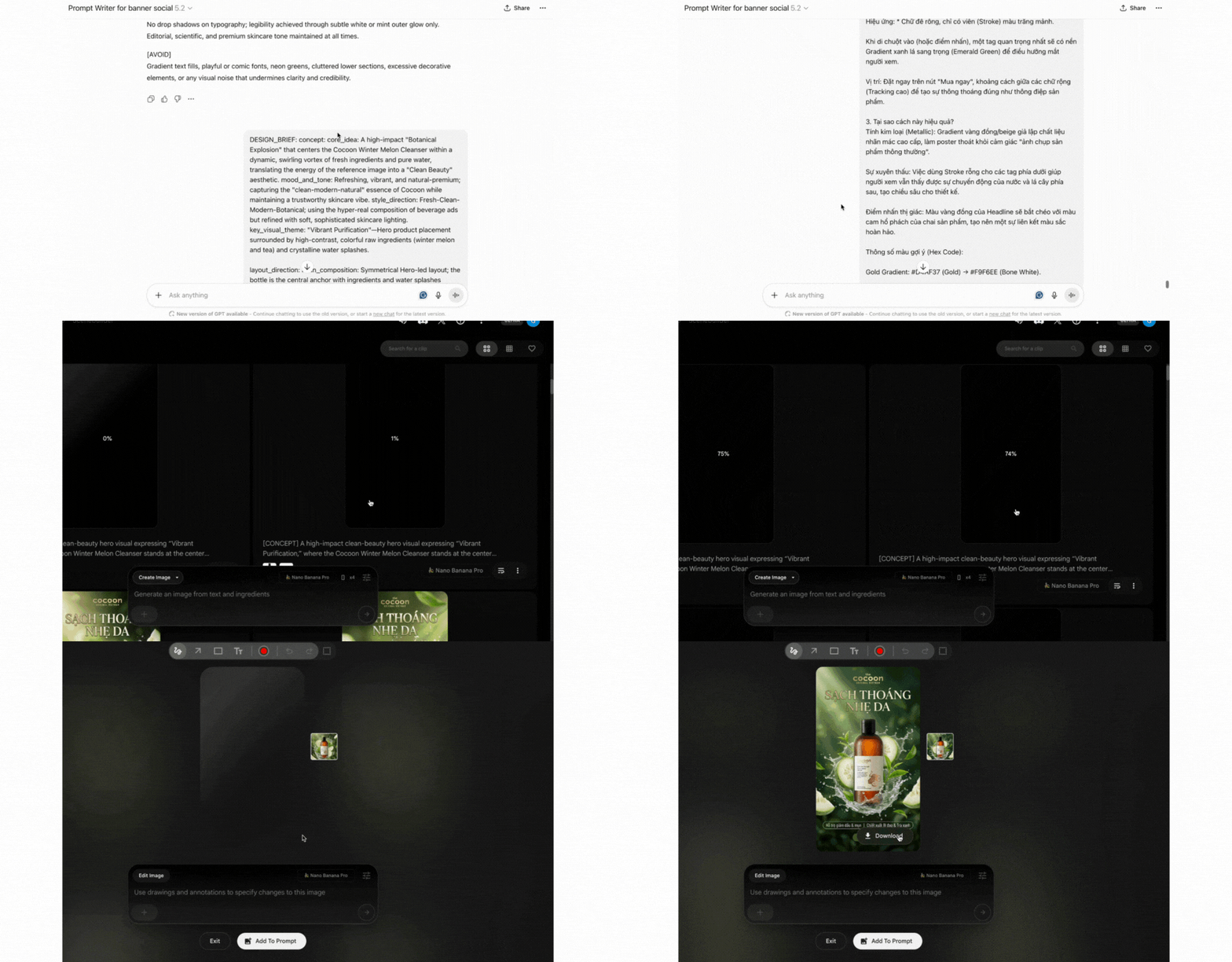
An example of using AI to design banners was mentioned during the orientation.
Afterward, you will be guided on how to integrate blockchain technology with practical applications in your field of study, and you will experience firsthand the app creation process using Figma in just a few minutes during the orientation session.
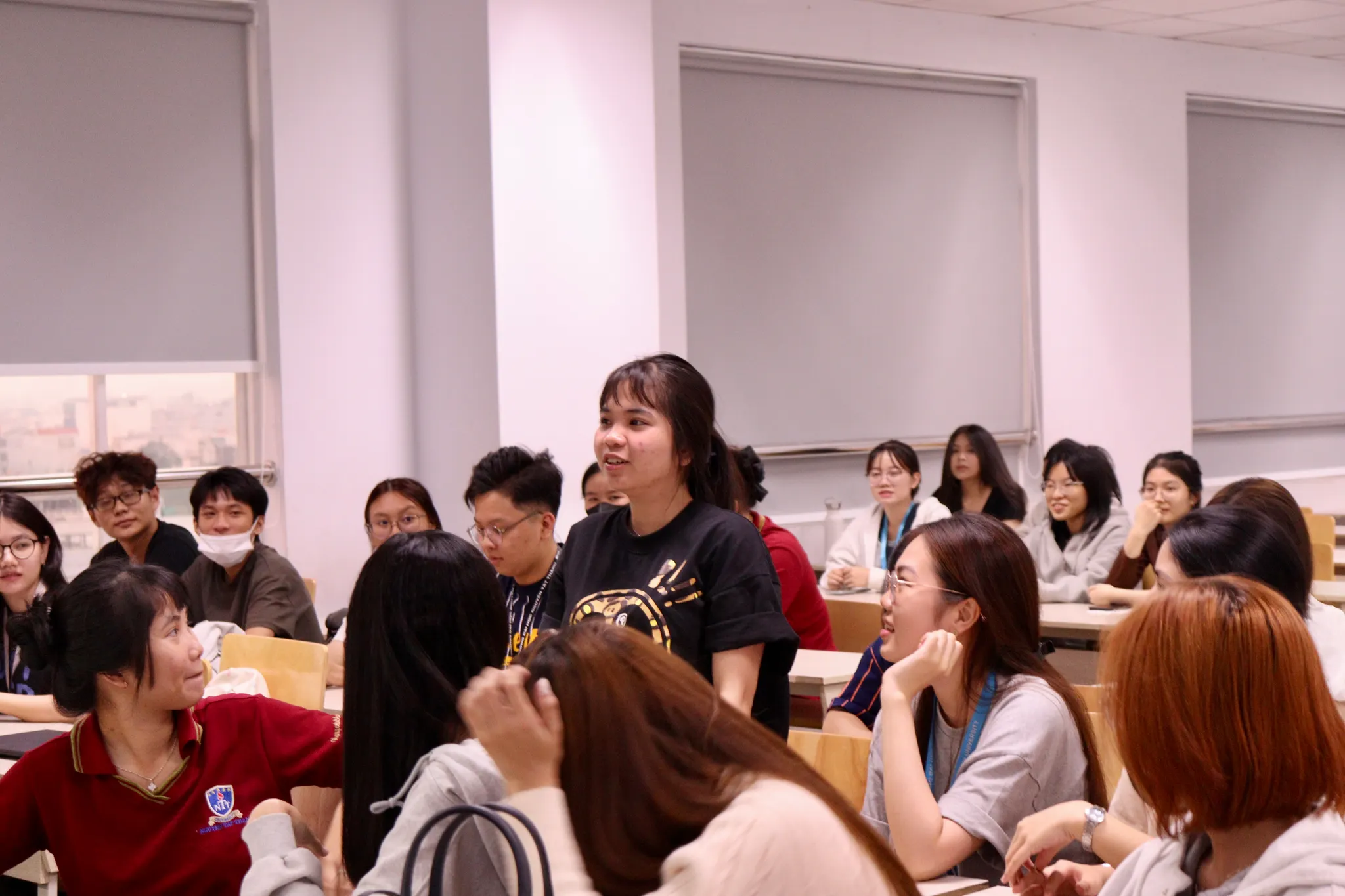
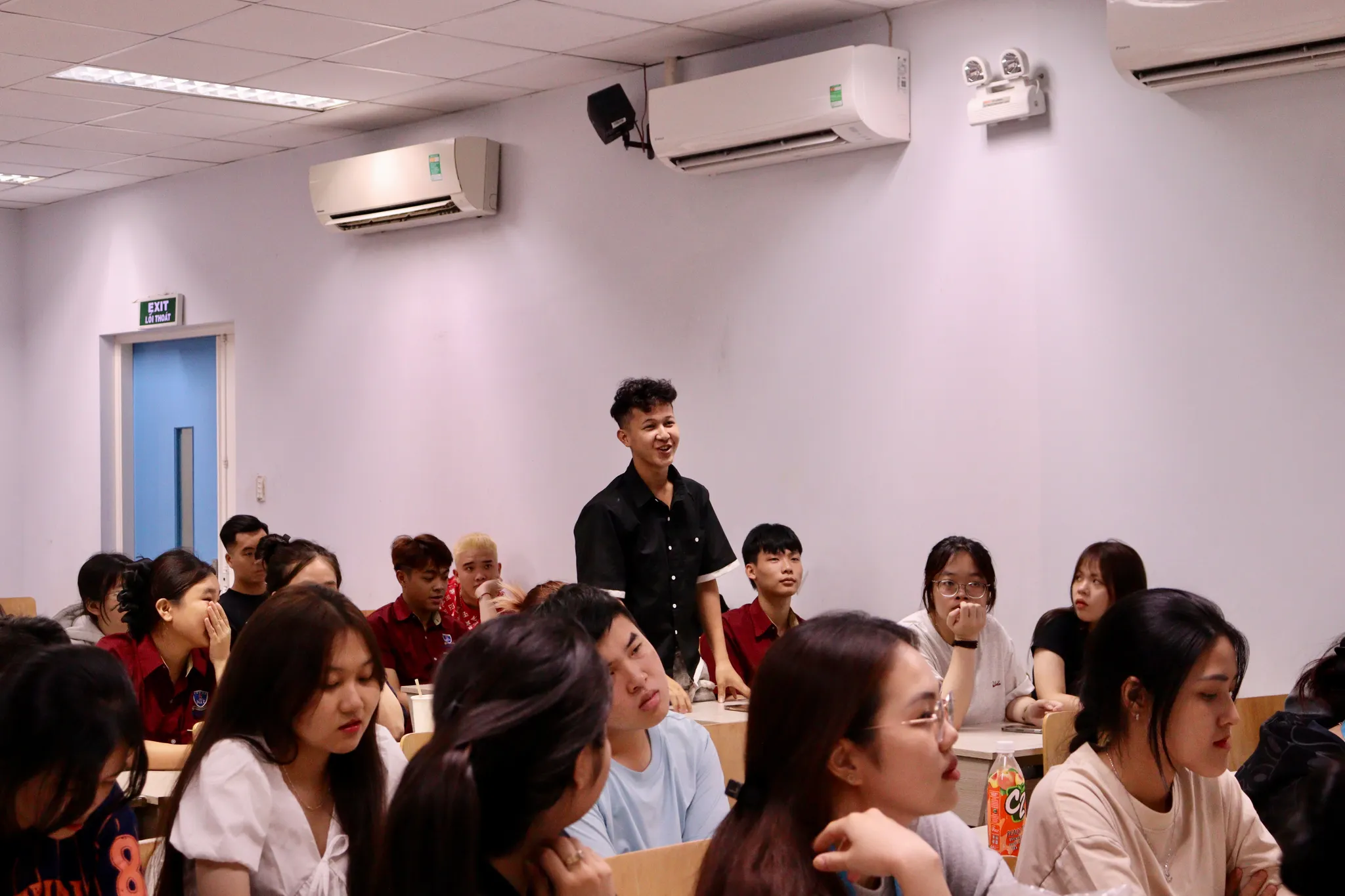
Lively discussion – students actively asked questions and offered counterarguments.
The counseling session encouraged free discussion among students, leading to numerous questions from both majors regarding the practical applications of Blockchain and AI in their respective fields. Despite the novelty of the topic, many students actively participated and offered their opinions, particularly on issues related to marketing , user experience, digital communication, and business models . The speakers provided thorough explanations, clarifying students’ concerns and guiding them toward appropriate learning and practice paths.
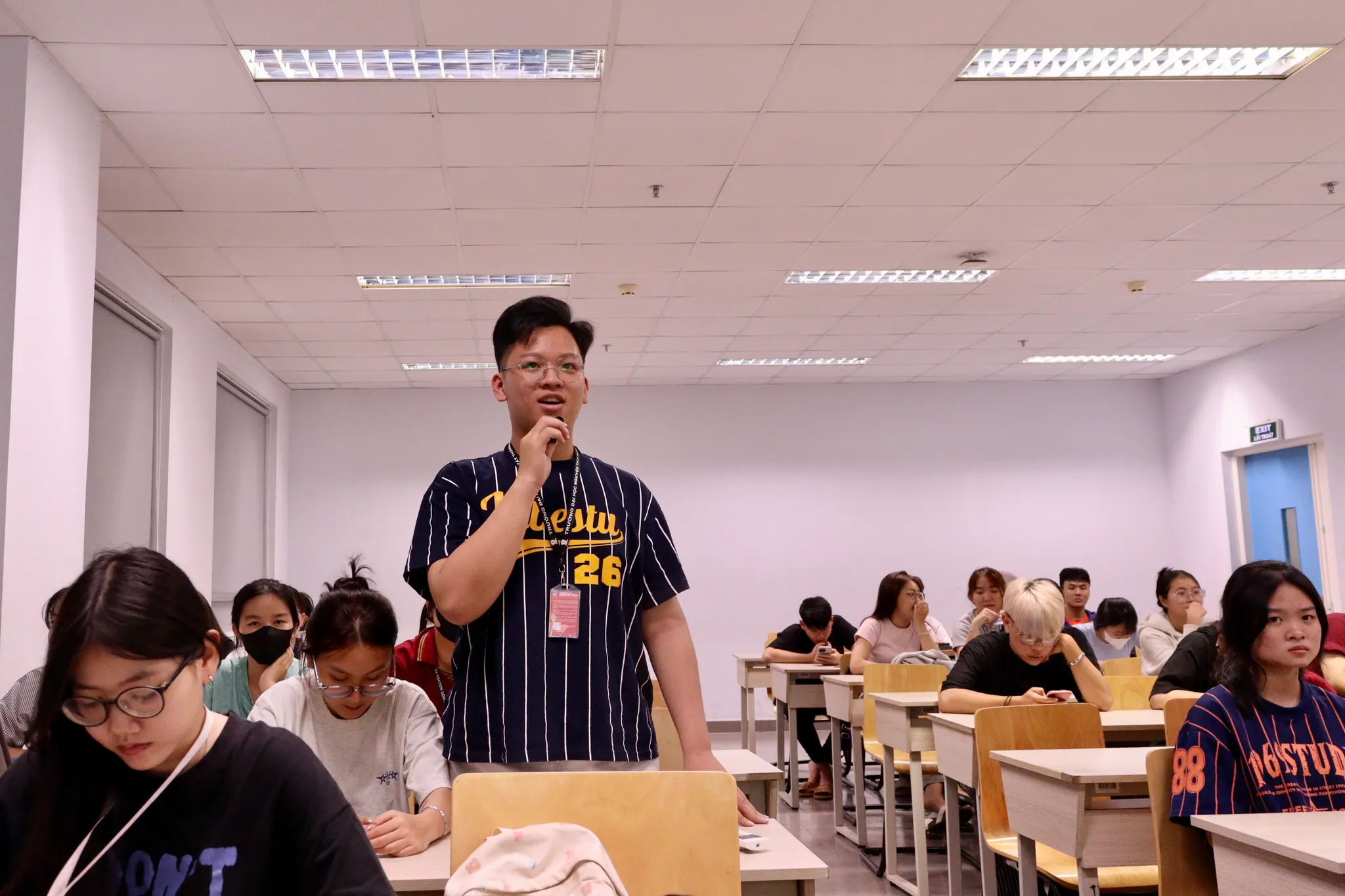
The orientation session concluded in an exciting and inspiring atmosphere. The program not only provided foundational knowledge, but more importantly, helped students “understand correctly – see the application – and do it themselves ,” thereby creating a foundation for them to proactively seize opportunities, develop their abilities, and shape their career paths in the digital age.