
 Tiếng Việt
NTTU – Aiming to create a prestigious academic forum where education administrators, scientists, lecturers, experts, and businesses from both within and outside the country can exchange and discuss core issues surrounding the impact of artificial intelligence on higher education – from theory to practice, from research to application deployment, on November 11, 2025, Nguyen Tat Thanh University organized the International Workshop “The Impact of Artificial Intelligence on Trends in Higher Education”.
The event brought together leading experts from France, Australia, and Poland to share and discuss the latest trends in artificial intelligence (AI) in higher education, research, and industry.
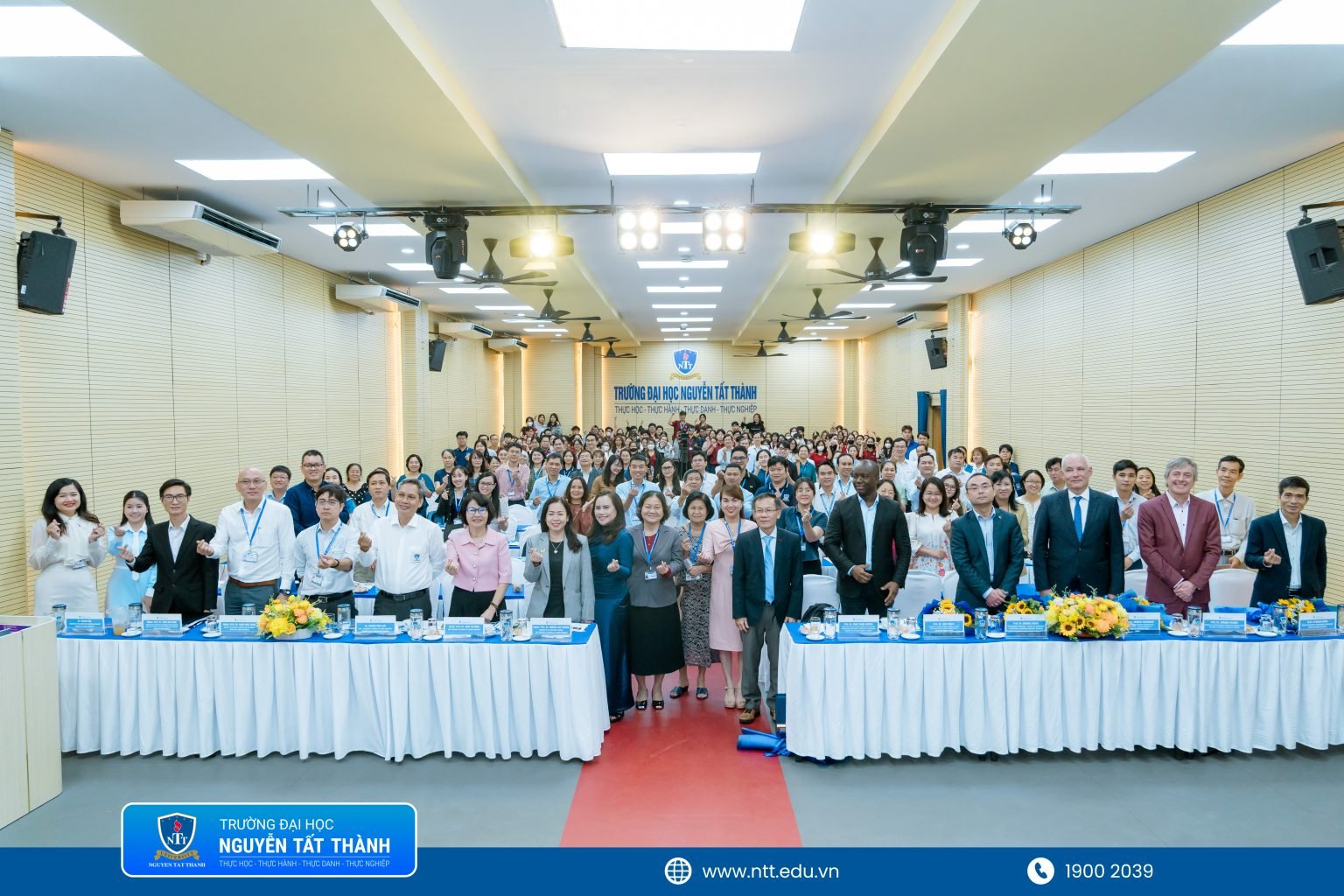
Overview of the program
In her opening remarks, Assoc. Prof. Dr. Nguyen Lan Phuong, Vice Rector of Nguyen Tat Thanh University, stated: “This workshop has provided a comprehensive overview of the opportunities and challenges of AI; international approaches and experiences in adjusting training programs; research and education strategies in the AI era; and especially very specific suggestions on the skills and competencies that lecturers and students need to possess so as not to be replaced but to be ‘enhanced’ by AI.” Assoc. Prof. Dr. Nguyen Lan Phuong also emphasized that organizing the workshop is an opportunity for Nguyen Tat Thanh University to strengthen its development orientation as an innovative university; review and update its digital transformation strategy and develop AI, information technology, and data science disciplines; and expand its international cooperation network in the field of AI and higher education, for the common benefit of learners and society.
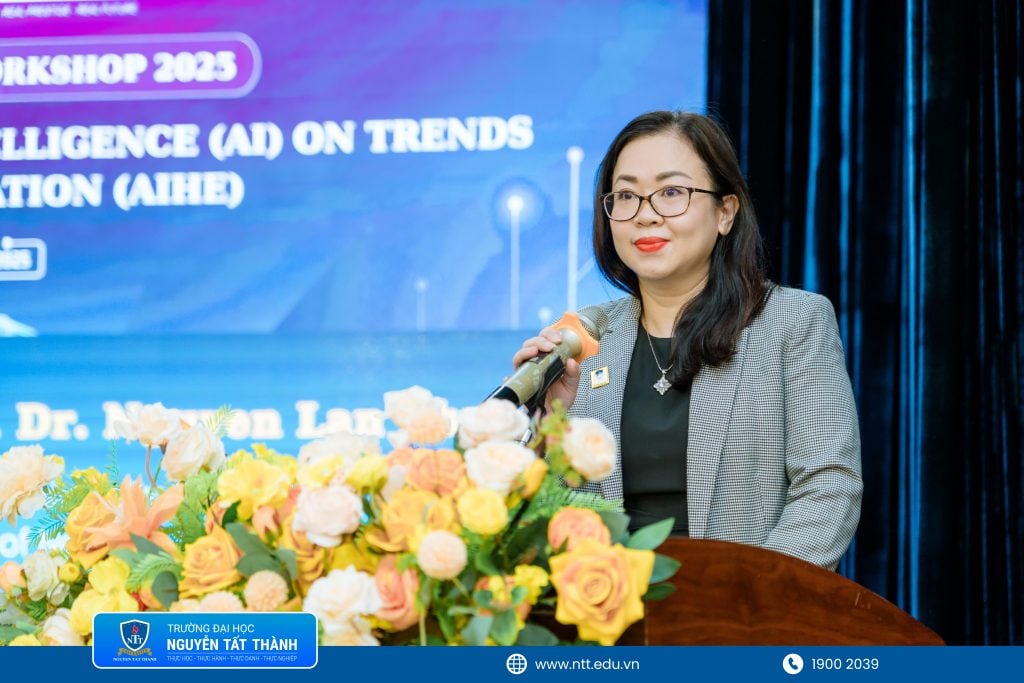
Assoc. Prof. Dr. Nguyen Lan Phuong, Vice Rector, Nguyen Tat Thanh University
In his opening remarks at the workshop, Professor Nguyen Ngoc Thanh – Chairman of the IEEE SMC Technical Committee on Collective Computational Intelligence and a member of the Informatics Committee of the Polish Academy of Sciences, Wroclaw University of Science and Technology, Poland – stated that the use of AI tools in higher education and many research fields brings many positive benefits. First, for lecturers and researchers, AI offers immense benefits in teaching and research. In addition, AI also contributes to the learning of students. However, alongside these certain benefits, AI also brings negative impacts to both teachers, students, and researchers. The workshop today aims to answer the questions: How will artificial intelligence replace academic lecturers? How can students use AI? How should training programs change to prevent future student unemployment? How are these issues being addressed globally, and what are the predictions for the next 10 years?
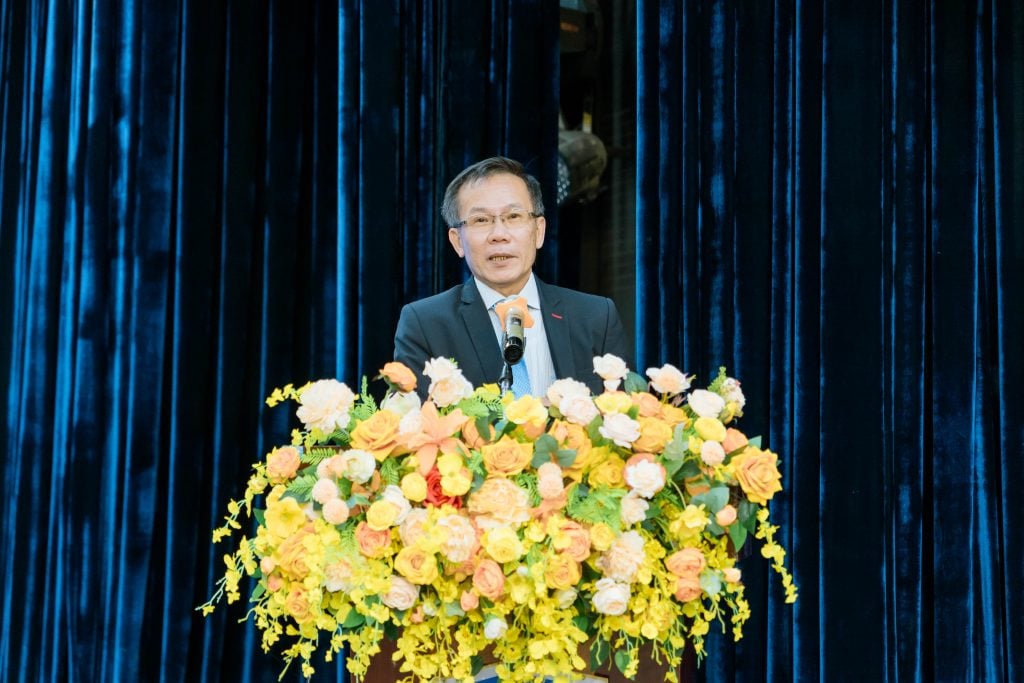
Prof. Dr. Nguyen Ngoc Thanh – Chairman of the IEEE SMC Technical Committee on Collective Computational Intelligence and member of the Informatics Committee of the Polish Academy of Sciences, Wroclaw University of Science and Technology, Poland
The workshop featured four outstanding presentations offering unique perspectives, helping attendees gain a more comprehensive understanding of the impact of AI in the new era, including:
(1) “AI Trends and Their Impact: Ensuring Educational Programs Stay Relevant” presented by Prof. Gayo Diallo (University of Bordeaux, France), focuses on analyzing three main directions of AI development – stochastic, symbolic, and generative AI. The speaker pointed out how these technologies are reshaping the global labor market and posing an urgent need for education: how to keep training programs relevant, especially in developing countries, where AI can have a profound but slower impact.
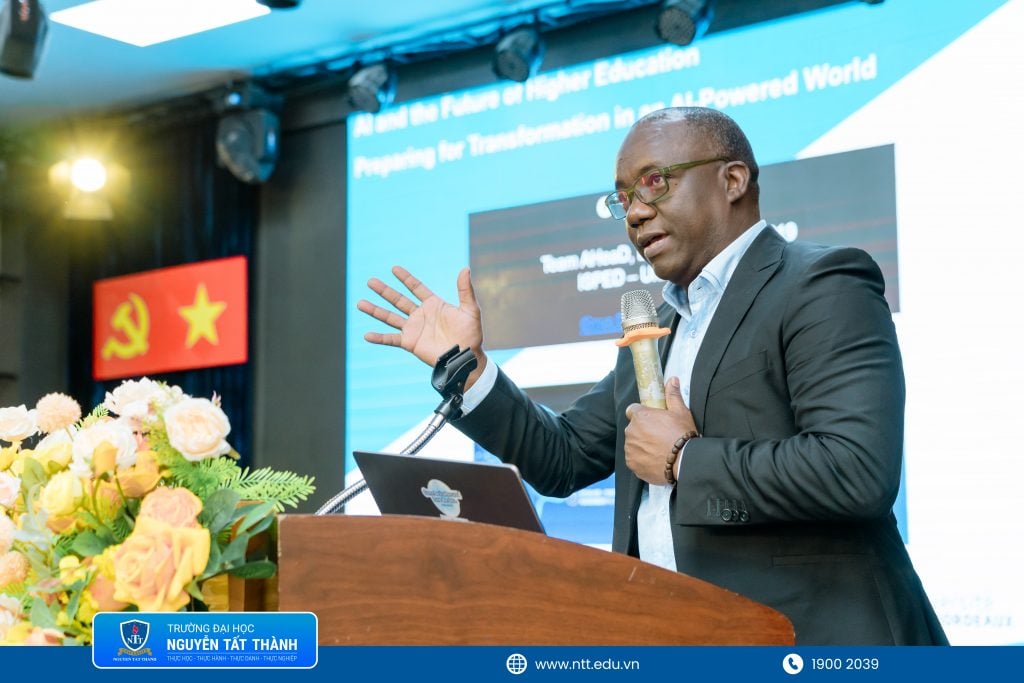
Professor Gayo Diallo (University of Bordeaux, France)
(2) “Transforming Research and Shaping Education Strategies in the Age of AI” presented by Prof. Michael Sheng (Macquarie University, Australia), emphasizes the importance of AI literacy in higher education. The paper introduces AI teaching programs at Macquarie University and proposes strategies for universities to proactively adapt and ensure students are equipped with the necessary skills in the context of the explosion of AI and large language models.
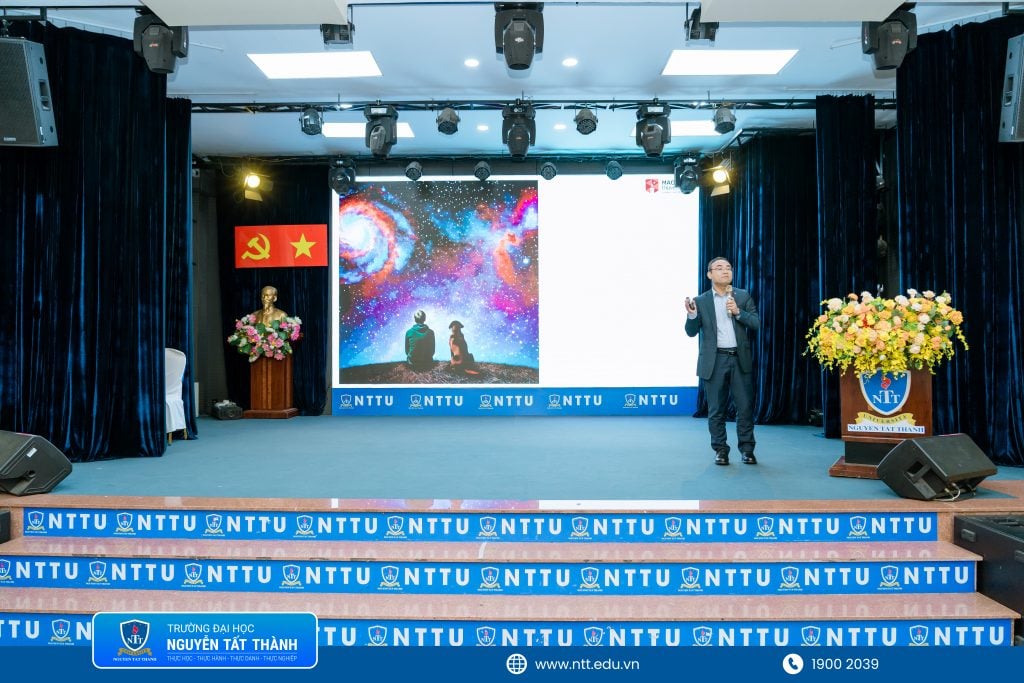
Professor Michael Sheng (Macquarie University, Australia) presented, emphasizing the importance of AI literacy in higher education.
(3) “Teaching Computer Science at Polish Universities in the Context of AI Expansion” by Prof. Andrzej Kucharski (Wroclaw University of Science and Technology, Poland) provides a practical look at integrating AI into computer science training at Polish universities. The paper raises the big question: How to prepare students for a rapidly changing labor market in the next 4–5 years? At the same time, the speaker also emphasizes the importance of guiding students and lecturers to use AI in accordance with academic ethics.
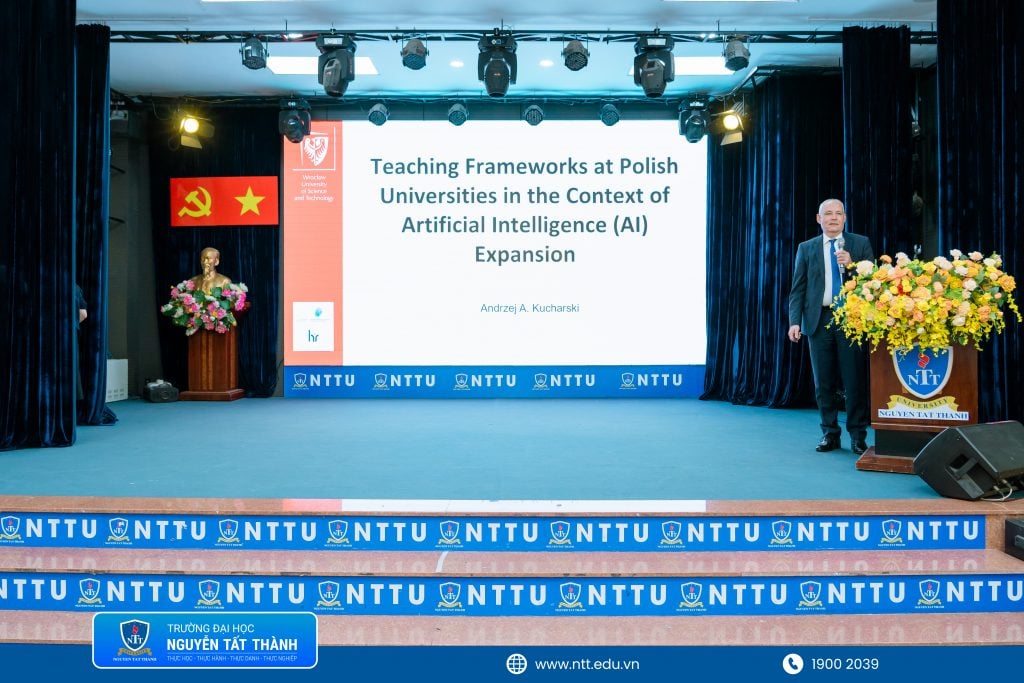
Prof. Andrzej Kucharski (Wroclaw University of Science and Technology, Poland)
(4) “Artificial Intelligence and its Impact on Education, Research, and Industry: What Does the Future Hold?” presented by Professor Edward Palmer (University of Adelaide, Australia), focuses on discussing the multifaceted impact of AI on education, research, and industry. The speaker points out that AI not only personalizes learning and expands access to knowledge, but also poses challenges to ethics, transparency, and trust in academic evaluation.
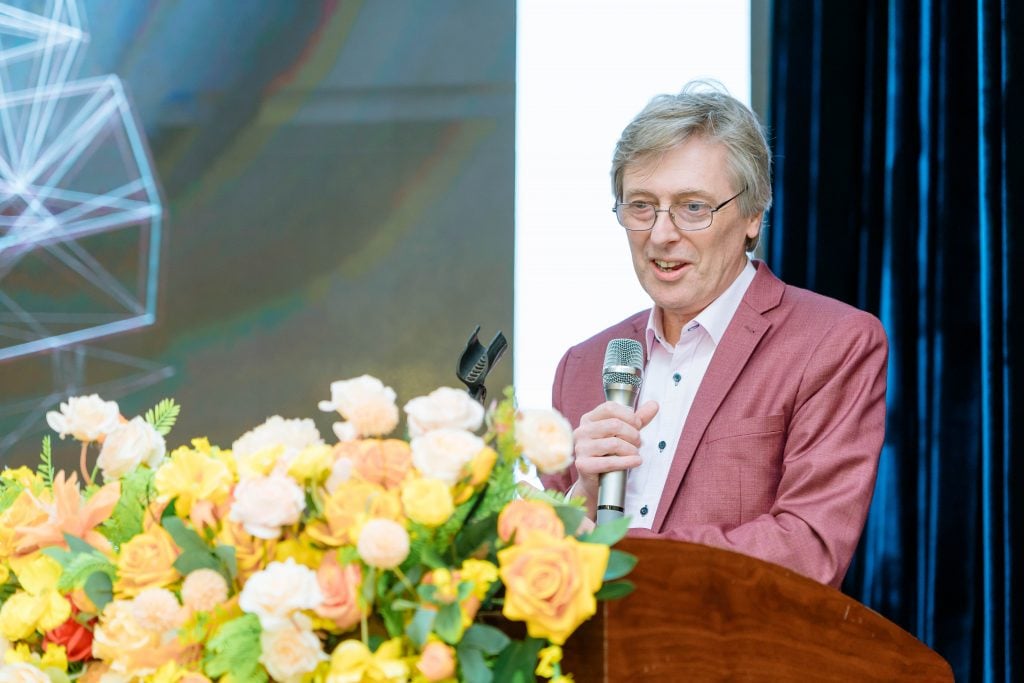
Professor Edward Palmer (University of Adelaide, Australia)
It can be seen that the common thread in the presentations above is the practical value they offer, affirming that AI is becoming a central driving force for global educational transformation. AI is not only a tool but also a powerful catalyst reshaping higher education – from training programs and teaching methods to student competencies. This requires universities to proactively innovate their programs, enhance their understanding of AI, and build strong ethical standards to effectively leverage the power of this technology.
In her concluding report, Associate Professor Dr. Tran Thi Hong stated that the workshop delivered a prominent and clear message: Artificial intelligence cannot replace humans but empowers them, provided that education plays a leading role in guiding, directing, and nurturing creativity and ethical responsibility. Higher education in the AI era needs to redefine its mission by: Promoting critical thinking, creativity, and ethical intelligence; Encouraging interdisciplinary research and practical applications; and Strengthening international cooperation to build a sustainable, human-centered learning ecosystem.
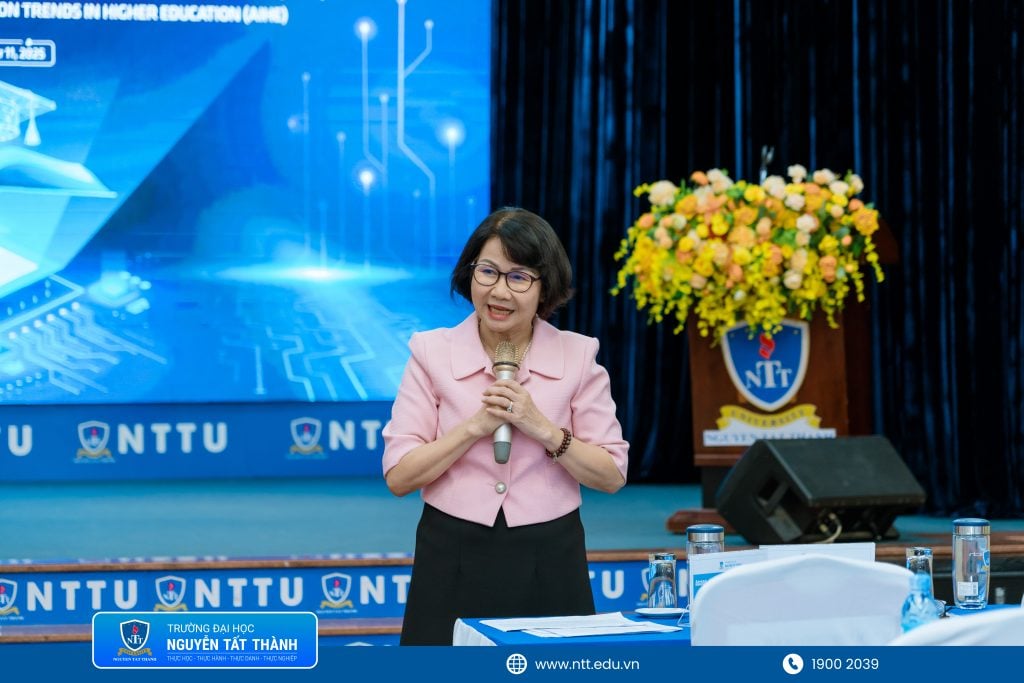
Assoc. Prof. Dr. Tran Thi Hong delivered the concluding remarks at the workshop.
The international workshop “The Impact of Artificial Intelligence (AI) on Trends in Higher Education – AIHE 2025” concluded with many insightful perspectives. Through a series of in-depth presentations and discussions, international speakers and scientists shared valuable experiences and proposed solutions to adapt, innovate, and improve the quality of education in the context of globalization. The exchanges and discussions at the event not only opened opportunities for international academic cooperation, knowledge and experience sharing, and strategic orientation for educational development in the AI era, but also contributed to shaping innovative thinking for Vietnamese education, making a practical contribution to the development of the country and the global scientific community.
As the organizing unit, Nguyen Tat Thanh University continues to affirm its position as a pioneering higher education institution in educational innovation, integration, and the application of technology in teaching, aiming to build a smart, creative, and humane learning environment. The success of this event is not only a testament to NTTU’s international networking and organizational capabilities but also a significant step in the university’s journey to keep pace with the development of global knowledge.
Phuong Nguyen – Media