
 Tiếng Việt
NTTU – Amidst the global digital transformation, digital competence is increasingly becoming a “mandatory requirement” for students to study, work, and adapt to the modern professional environment. To help students access international skill standards and keep up with the digitalization trend, Nguyen Tat Thanh University (NTTU) recently organized a thematic presentation program titled “Pix – A Digital Competency Certification System for Students.”
The event attracted considerable interest from faculty, students, and partner organizations. The program was honored to welcome Professor Temperman Gaëtan from the University of Mons (Belgium) – a research expert in digital education, who presented a report. Also in attendance were representatives from the Pix organization (France), the ACCEES project, member universities from Vietnam and abroad, and numerous businesses and educational organizations participating both in person and online.
On the NTTU side, the program was attended by Prof. Dr. Nguyen Kim Hong – Rector of the University, Dr. Phan Thi Viet Nam – Vice Rector of the University, along with Heads/Deputy Heads of units, Faculties, Institutes, Offices, and Departments…
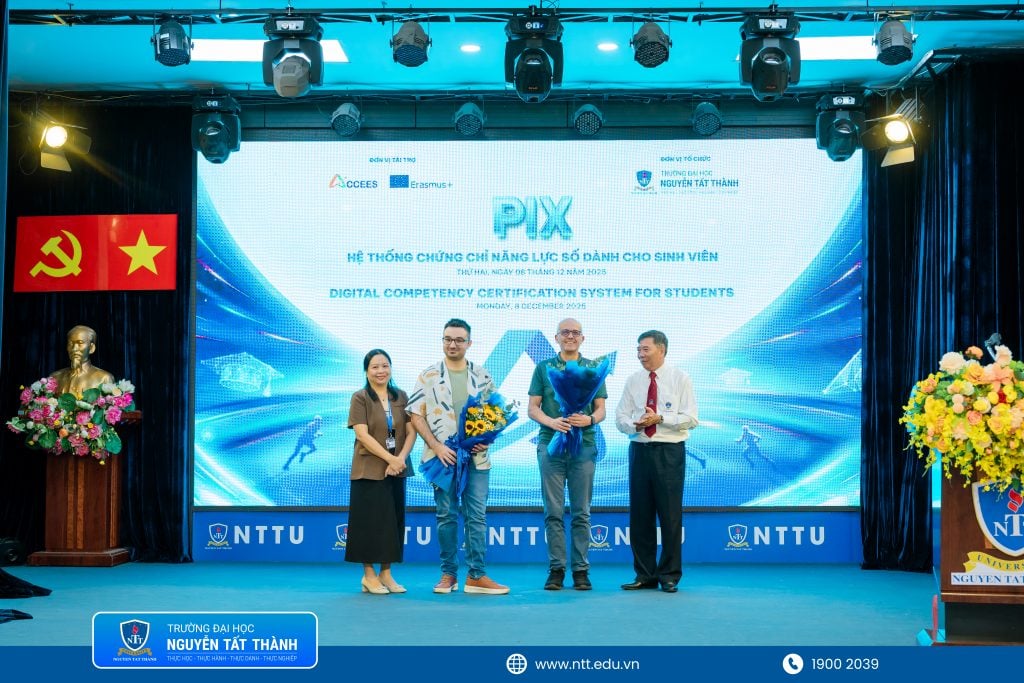
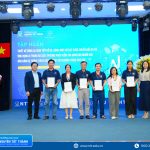
Professor Dr. Nguyen Kim Hong – Rector and Dr. Phan Thi Viet Nam – Vice Rector, representing the University, presented flowers to thank the speakers.
Digital skills – a vital condition for students in the 4.0 era.
In her opening remarks, Dr. Phan Thi Viet Nam – Vice Rector of the University – emphasized that the Fourth Industrial Revolution is profoundly changing the entire educational ecosystem. Not only are learning models changing, but even the competency requirements of the labor market are shifting strongly towards digitalization. In this context, digital competence is no longer an “extra skill” but has become a key factor for students to learn effectively and adapt to the new work environment.
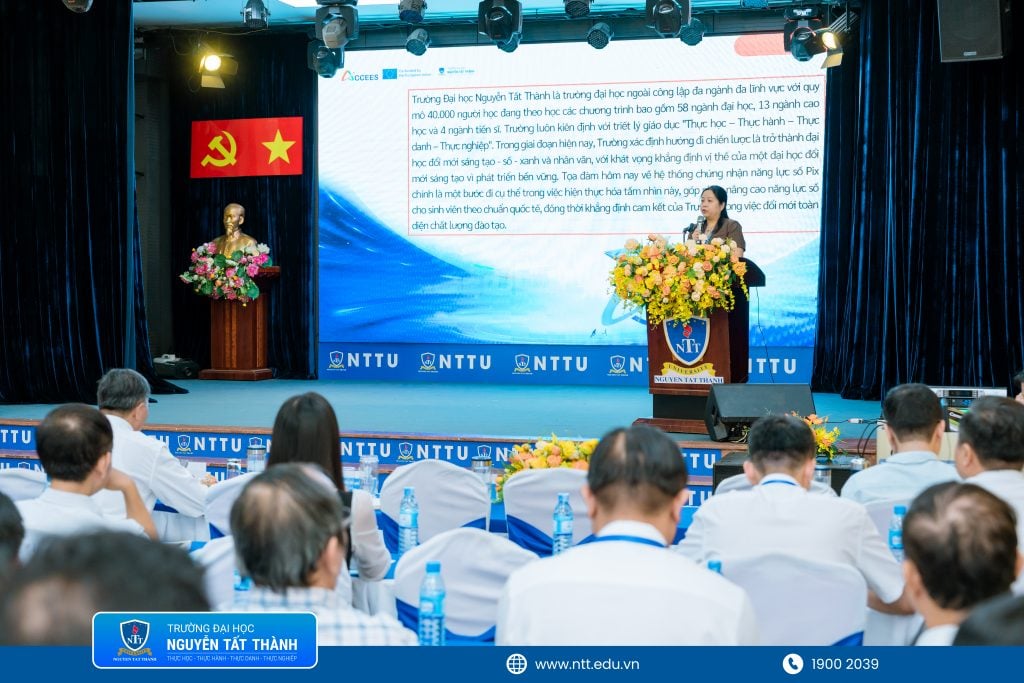
Dr. Phan Thi Viet Nam – Vice Principal of the school, delivered the opening speech for the program.
“The Pix digital competency certification system workshop is an important step in the strategy of building Nguyen Tat Thanh University into an innovative, digitized, green, and humanistic university. This is not only a professional activity but also a strong commitment of the University to enhancing digital competencies for students, aiming for comprehensive educational innovation,” affirmed Dr. Phan Thi Viet Nam.
Research data shows that digital competence is determining students’ adaptability.
In his professional presentation, Professor Temperman Gaëtan analyzed research findings on the impact of digital skills on students’ learning and career development. According to the professor, after the Covid-19 pandemic, learning and working on digital platforms has become widespread. Technological skills are now fundamental for students to be creative, self-learn, and problem-solving.
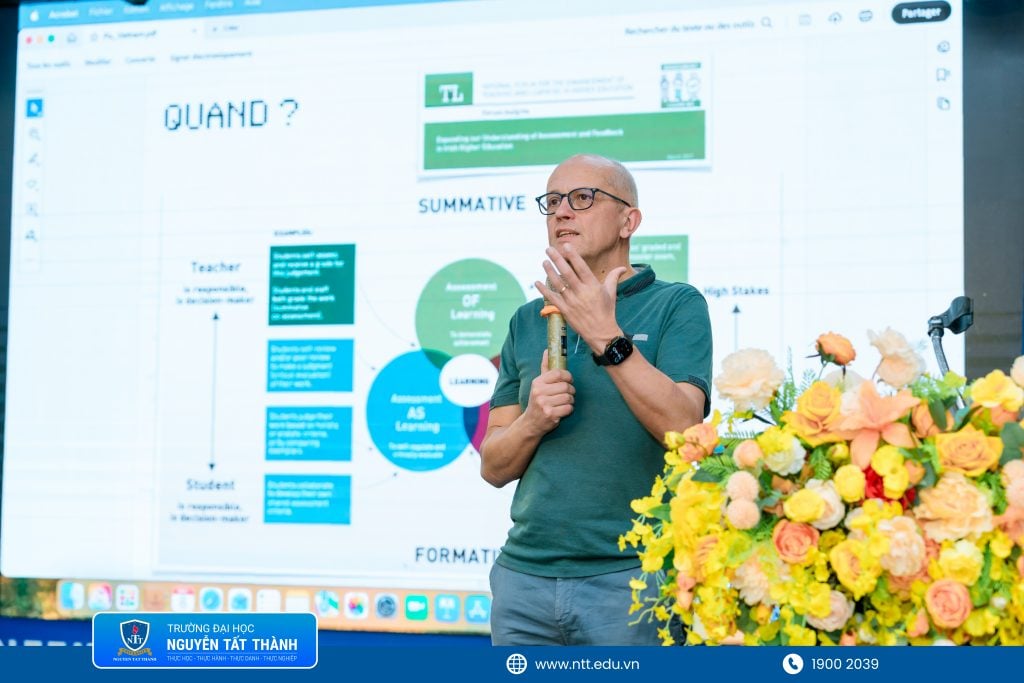
Professor Temperman Gaëtan, a specialist in digital education research at the University of Mons (Belgium).
He argued that digital competence goes beyond simply knowing how to use computers or office tools, encompassing information processing, digital communication, data-driven thinking, personal security, and the ability to solve complex digital problems. “In the context of global competition, an internationally standardized assessment system will help students demonstrate their practical abilities while providing employers with a more transparent basis for evaluation,” the professor emphasized.
Pix – a “digital passport” according to European standards.
At the event, Ms. Angélina Magne – representative of the Pix organization – introduced the digital competency assessment platform currently widely used in Europe. Pix is developed based on the European Union’s DigComp digital competency framework, encompassing five main skill groups: data processing, digital communication and collaboration, content creation, information security, and digital problem-solving.
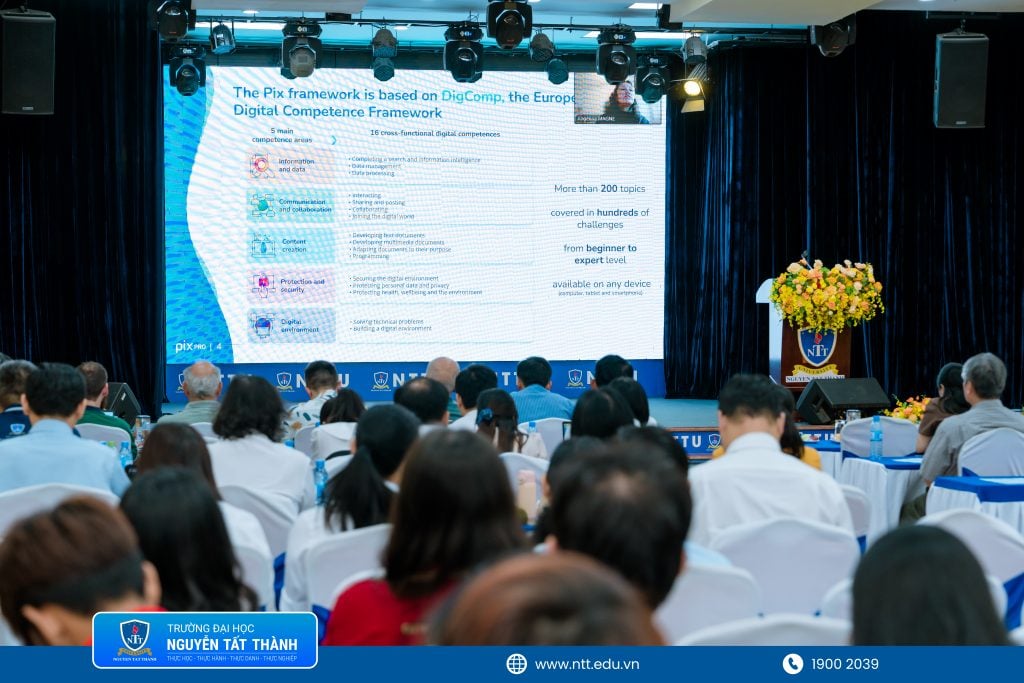
Ms. Angélina Magne – representative of the Pix organization – introduced the digital competency assessment platform currently widely used in Europe.
According to her, Pix is not just a test, but a comprehensive assessment system that can measure digital competence in detail and transparently. The Pix certification is currently recognized by many major universities in France and Europe as a criterion for assessing students’ digital competence before graduation.
Thanks to its objectivity and international comparability, Pix is becoming a “digital passport” that helps learners feel more confident when entering the global job market. For Vietnamese students, possessing a Pix certificate is considered a significant advantage when applying to companies requiring high digital skills or when seeking job opportunities abroad.
Discussing the possibility of deploying Pix in Vietnam.
Following the presentation, a lively discussion took place between ACCEES representatives and member universities, with many questions revolving around bringing Pix to Vietnam. The exchange focused on factors such as infrastructure, exam organization procedures, human resource training, and the possibility of integration into existing training programs.

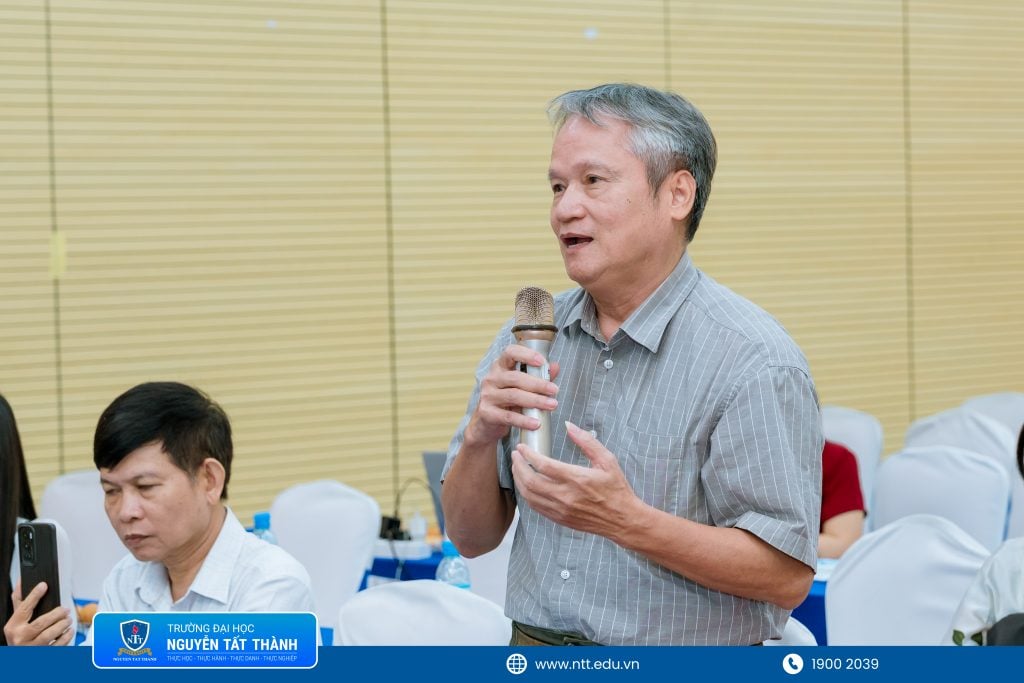

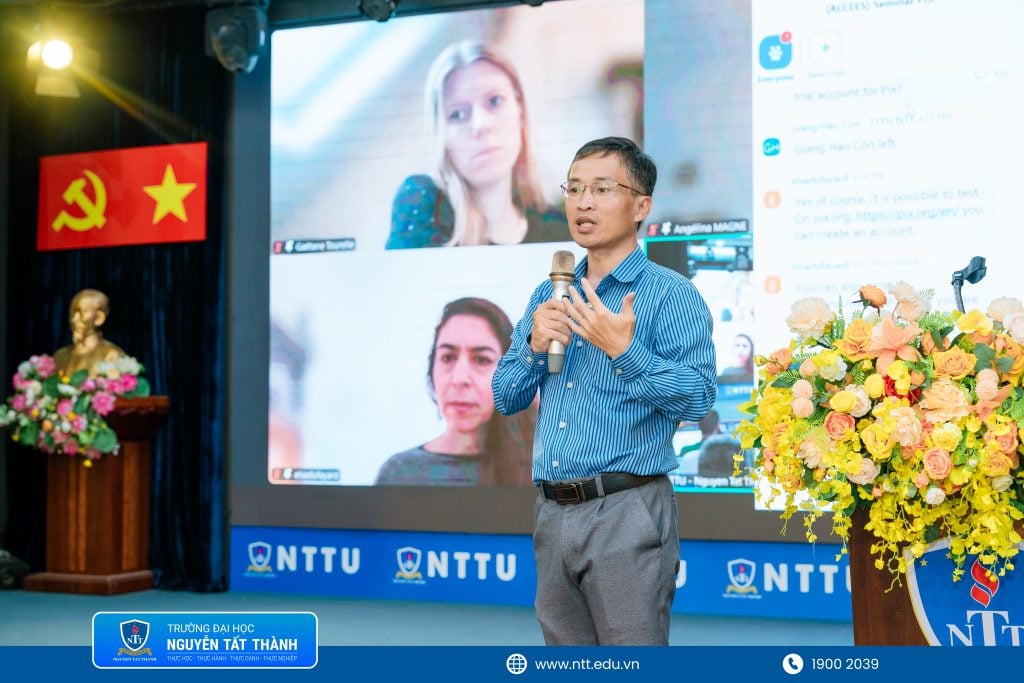
Many questions from representatives of member universities revolved around bringing Pix to Vietnam.
NTTU students expressed interest in how Pix assesses competency, the difficulty of the tests, and the applicability of the certification in recruitment. Lecturers, in turn, questioned the implementation mechanism, approach, and whether Pix is suitable for the technological level of Vietnamese students.
International experts provided detailed answers and assessed that Vietnam is fully capable of implementing Pix in the near future if it has good preparation in terms of technological infrastructure and support staff.
Affirming NTTU’s pioneering position in digital transformation.
Organizing a thematic presentation on Pix demonstrates NTTU’s proactive approach to international skills standards in order to enhance students’ digital capabilities. This is also part of the university’s digital transformation strategy, aiming to build a smart, modern learning ecosystem deeply connected with businesses and the labor market.
According to NTTU representatives, the university will continue to research the feasibility of implementing digital competency assessment systems, including Pix, to enable students to access global skill standards during their studies. This is expected to contribute to improving the quality of Vietnam’s human resources in the digital age, where digital competencies become key to unlocking broader career opportunities for learners.
The thematic report “Pix – A Digital Competency Certification System for Students” is part of the ACCEES project, an initiative funded by the European Union with a total budget of 1 million euros. The project, implemented from 2025–2028, aims to promote the digital technology ecosystem in Vietnamese higher education according to international standards, while simultaneously enhancing the digital competence of lecturers and students.
The project involves three European universities, nine Vietnamese universities, as well as international organizations and Vietnamese government agencies, including: the University of Strasbourg (France), Mons University (Belgium), Patras University (Greece), Can Tho University, Hanoi University, Danang University of Technology, Nguyen Tat Thanh University, University of Transport, Ho Chi Minh City University of Economics, Ho Chi Minh City University of Agriculture and Forestry, the Francophone International University – Vietnam National University, Hanoi University of Education, and the Information and Statistics Department.
Author: Thiên Bảo – Cẩm Thạch
Image: Media