
 Tiếng Việt
NTTU – Amidst the significant restructuring of higher education in East Asia following the pandemic, the Transnational Education (TNE) model is increasingly becoming a dominant trend. From February 3rd to 6th, 2026, a delegation from Nguyen Tat Thanh University (NTTU) participated in a series of international education events in Indonesia, with the highlight being the UK-Vietnam Higher Education Cooperation Workshop held in Jakarta. The event attracted the attention of many leading universities worldwide and was considered an important forum to promote the Transnational Education (TNE) model in East Asia.
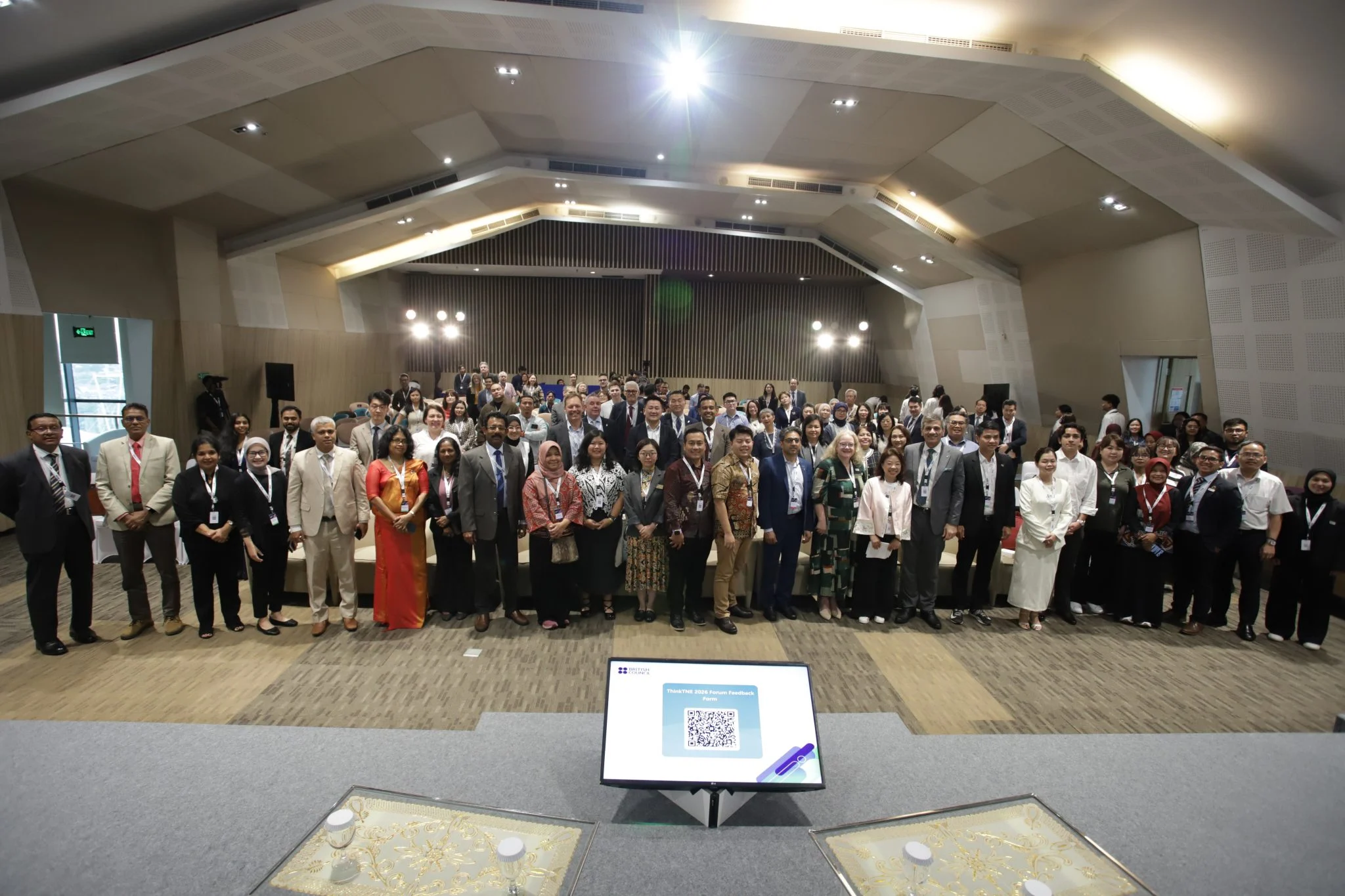
Representatives from the universities pose for a commemorative photo at the conference.
The NTTU delegation, represented by Dr. Luu Nguyen Duc Hanh – Deputy Head of the International Cooperation Department, Deputy Head of the Nursing Faculty, and Ms. Pham Tran Tu Anh – Specialist in the International Cooperation Department, participated in the meeting. During the working sessions, NTTU representatives not only listened but also actively exchanged ideas and connected with many universities and educational organizations, experts, and international university leaders regarding new training trends, especially the introduction of foreign programs to be taught in host countries instead of focusing solely on the traditional study abroad model.
At the thematic discussion on TNE on February 4th, Matt Durnin, representative of Nous Education Consulting Company, noted that East Asia is becoming the fastest-growing education market in the world after COVID-19, as the demand for international education has not decreased but has shifted towards more flexible forms. According to him, instead of going abroad at high costs, more and more students are choosing joint programs within their own countries, where international academic quality is combined with convenience in terms of environment and finances.
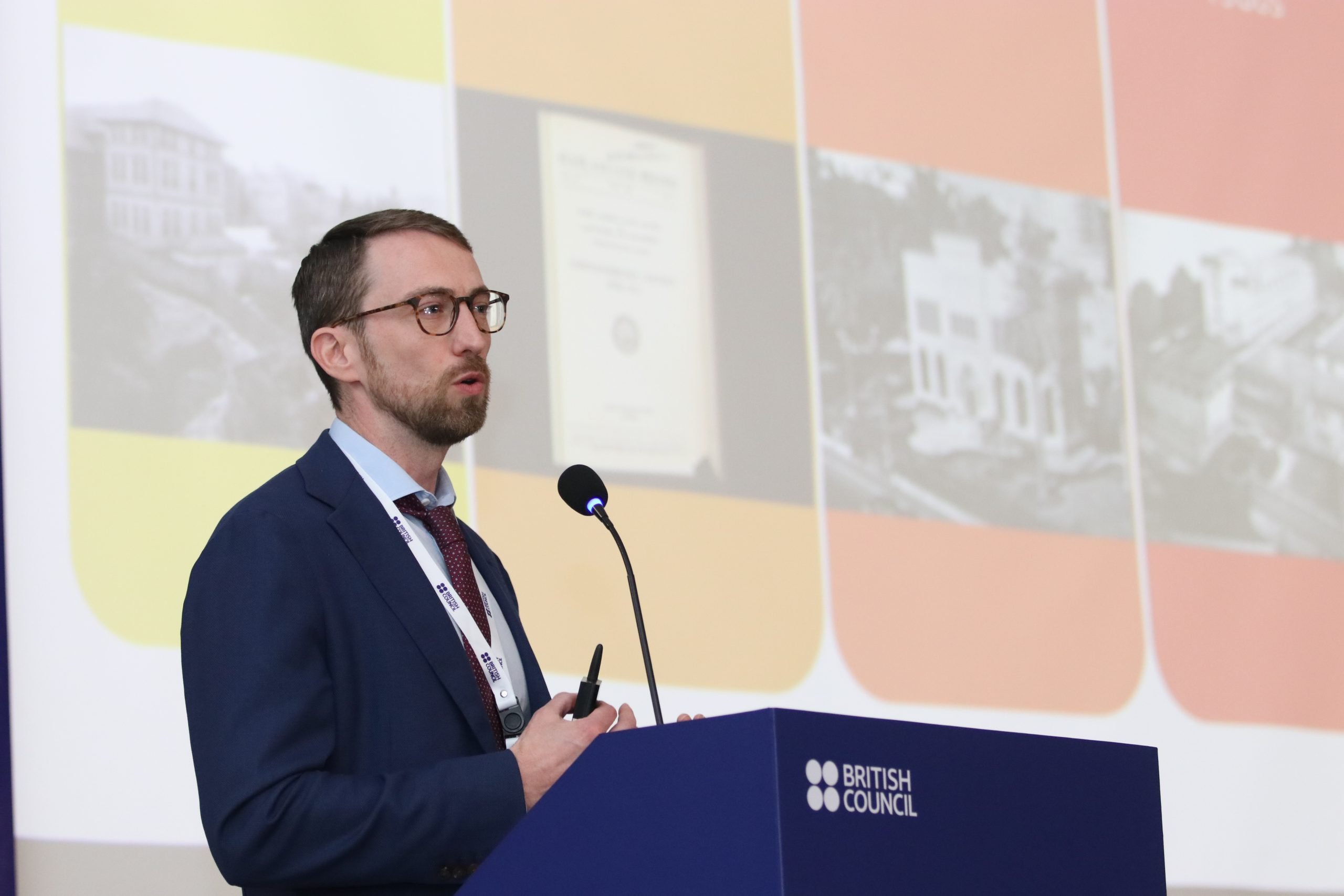
Matt Durnin shared his insights on educational trends in East Asia.
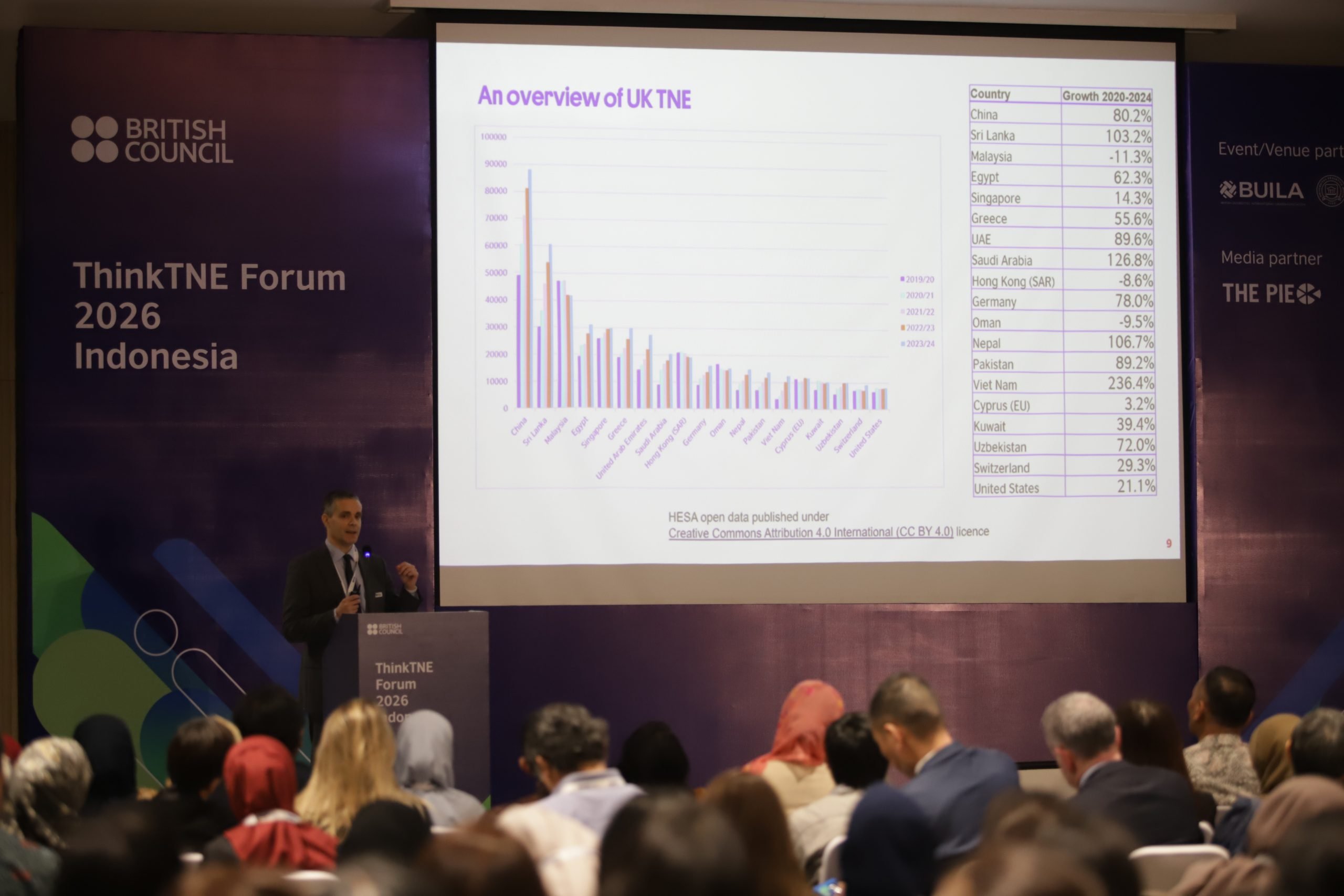
Impressive figures on the growth of transnational education in Vietnam.
The British Council’s “Transnational Education in East Asia” report also shows that Vietnam is one of the bright spots in the region, with the number of students enrolling in international cooperation programs increasing by more than 200% between 2020 and 2024. This figure clearly reflects the trend of internationalizing education in Vietnam entering a new phase, not only relying on traditional overseas study but gradually shifting towards a model of “bringing programs to Vietnam”.
In this context, NTTU is recognized as one of the universities in Vietnam that proactively embraced this trend early on. On the sidelines of the conference, representatives from the university held bilateral meetings with the University of Lancashire, Buckinghamshire University, Portsmouth University, and the UK Quality Assurance Agency for Higher Education (QAA). The discussions focused on the potential for developing joint training programs, student-faculty exchanges, and gradually building an international education ecosystem right here in Vietnam through NTTU’s existing platform.
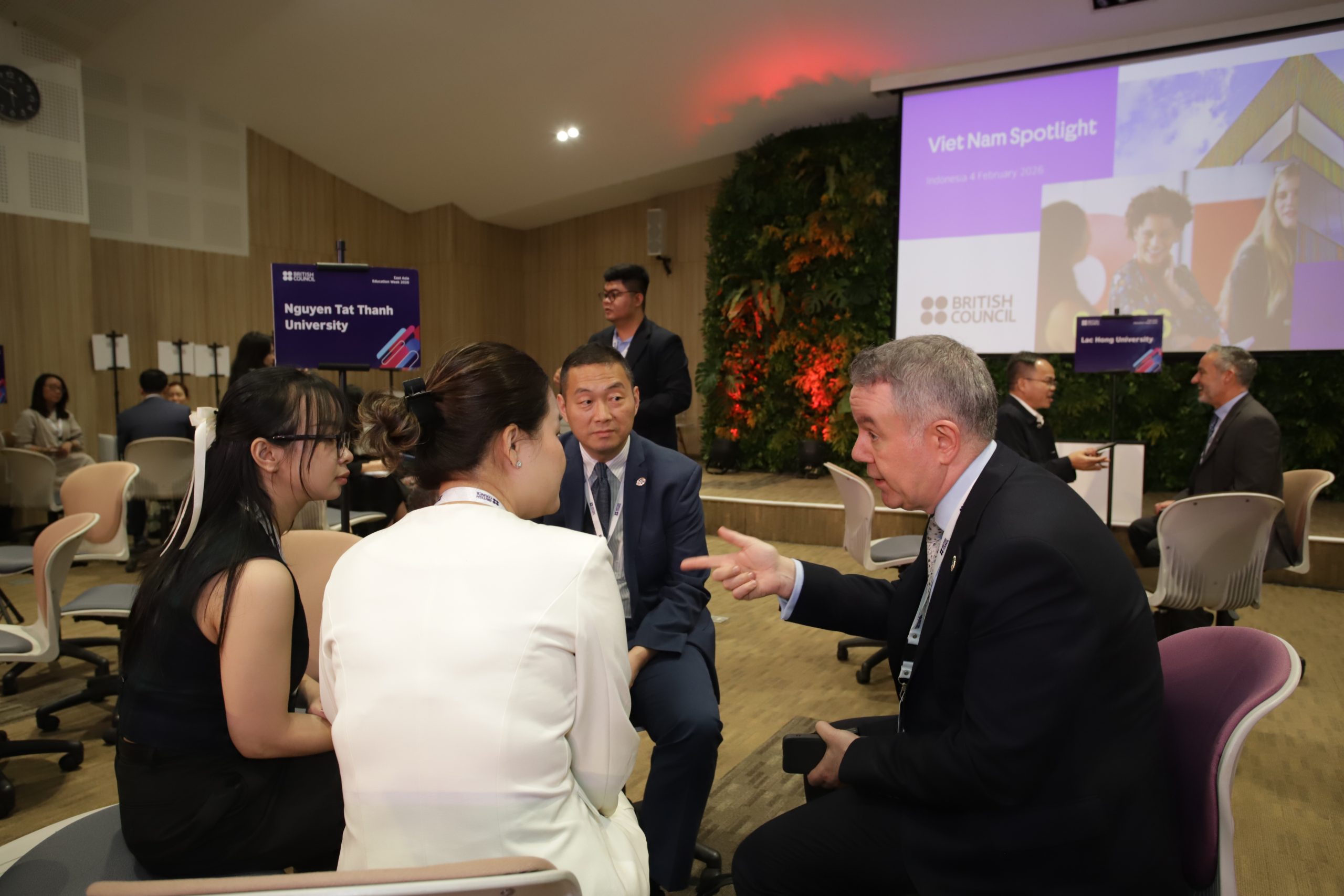
The atmosphere during the exchange of cooperation opportunities between NTTU and its UK partners was lively.
Sharing further insights at Vietnam Spotlight, Dr. Luu Nguyen Duc Hanh – Deputy Head of the International Cooperation Department, Deputy Head of the Nursing Faculty at Nguyen Tat Thanh University (Ho Chi Minh City) – stated that Vietnamese universities are increasingly confident in exchanging information and exploring international partnerships. According to her, more and more students are choosing joint training programs offered by Vietnamese universities to “study abroad locally” instead of pursuing full-time studies overseas, thereby creating a favorable foundation for expanding transnational educational cooperation.
Another notable trend, according to Ms. Hanh, is that more and more foreign universities are looking to start collaborations in fields such as engineering, tourism, and hospitality, instead of focusing solely on easier-to-implement fields like business. “Many international partners also share that what they are looking for is not how many awards a Vietnamese university has won, but more importantly, whether both sides truly share a common vision and voice in their training strategy,” the female doctor stated.
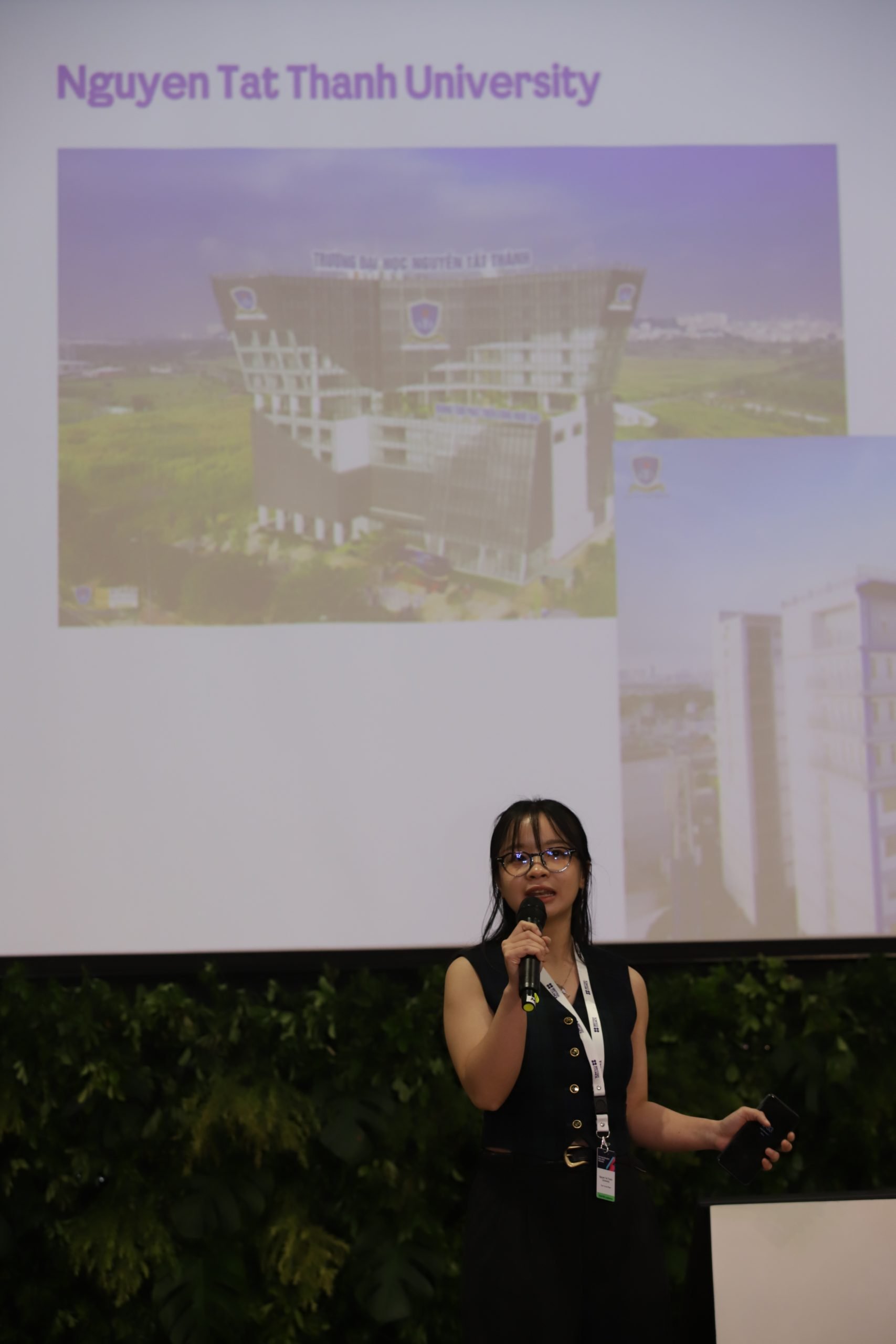
Representatives from NTTU presented the university’s capabilities and development direction.
According to NTTU representatives, the university’s international cooperation strategy goes beyond formal agreements and aims for the long-term goal of creating a multicultural learning environment where Vietnamese students can access international-standard education right in their own country. This is also a way for NTTU to improve the quality of its human resources while contributing to reducing the financial burden of studying abroad for students and their families.
As part of their working visit, on February 5th, the NTTU delegation continued their tour by visiting the Deakin University – Lancaster University Indonesia (DLI) campus in Bandung. DLI is currently considered a prime example of transnational education in Southeast Asia, successfully operating a joint program between two leading universities from Australia and the UK in Indonesia. During the visit, DLI representatives shared details about their academic governance model, quality control of training, and how they overcome legal obstacles in implementing international programs.
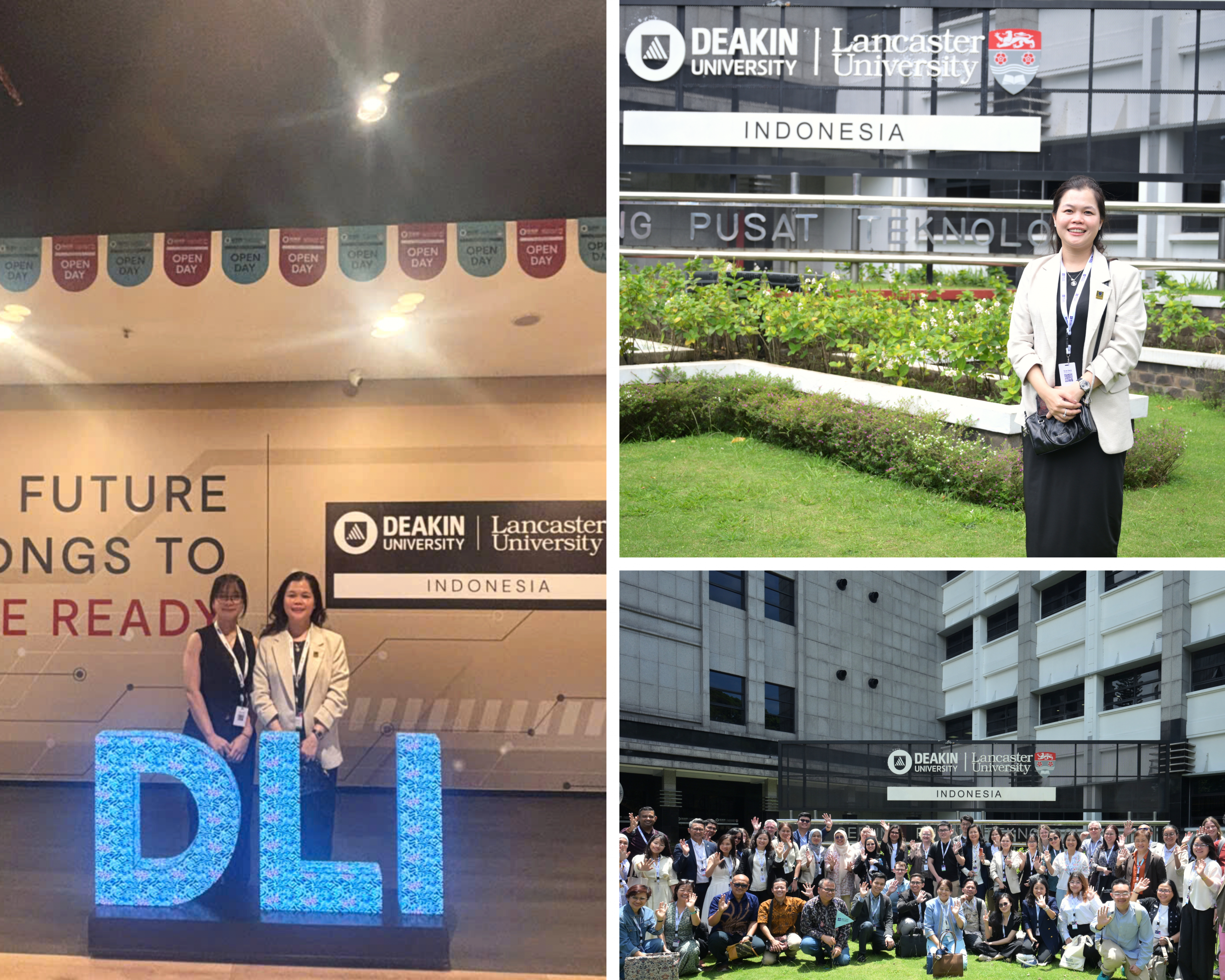
The practical experiences from DLI are considered a valuable reference for NTTU in the context of Vietnam’s education system, which is undergoing deep integration but still faces many challenges regarding policy, learning outcomes, and operational capacity. Directly accessing a successful model provides NTTU with a stronger foundation to build a suitable roadmap, avoid following established paths, and reduce risks when implementing future collaborative programs.
From Jakarta to Bandung, this business trip not only holds diplomatic significance but also clearly demonstrates NTTU’s determination to transform itself in its long-term development strategy. In the context of increasingly fierce competition among educational institutions, international cooperation is seen as a “soft key” to improving training quality, enhancing brand appeal, and expanding learning opportunities for students.
With a focus on linking training with practical needs and global standards, NTTU is gradually building the image of a university that not only trains for the domestic market but is also ready to participate deeply in the international education network. This is also the path that many universities in the region have chosen to enhance their competitiveness, in the context of knowledge without borders and education becoming an increasingly comprehensively integrated field.
Prepared by: Tu Anh – International Cooperation Department