
 Tiếng Việt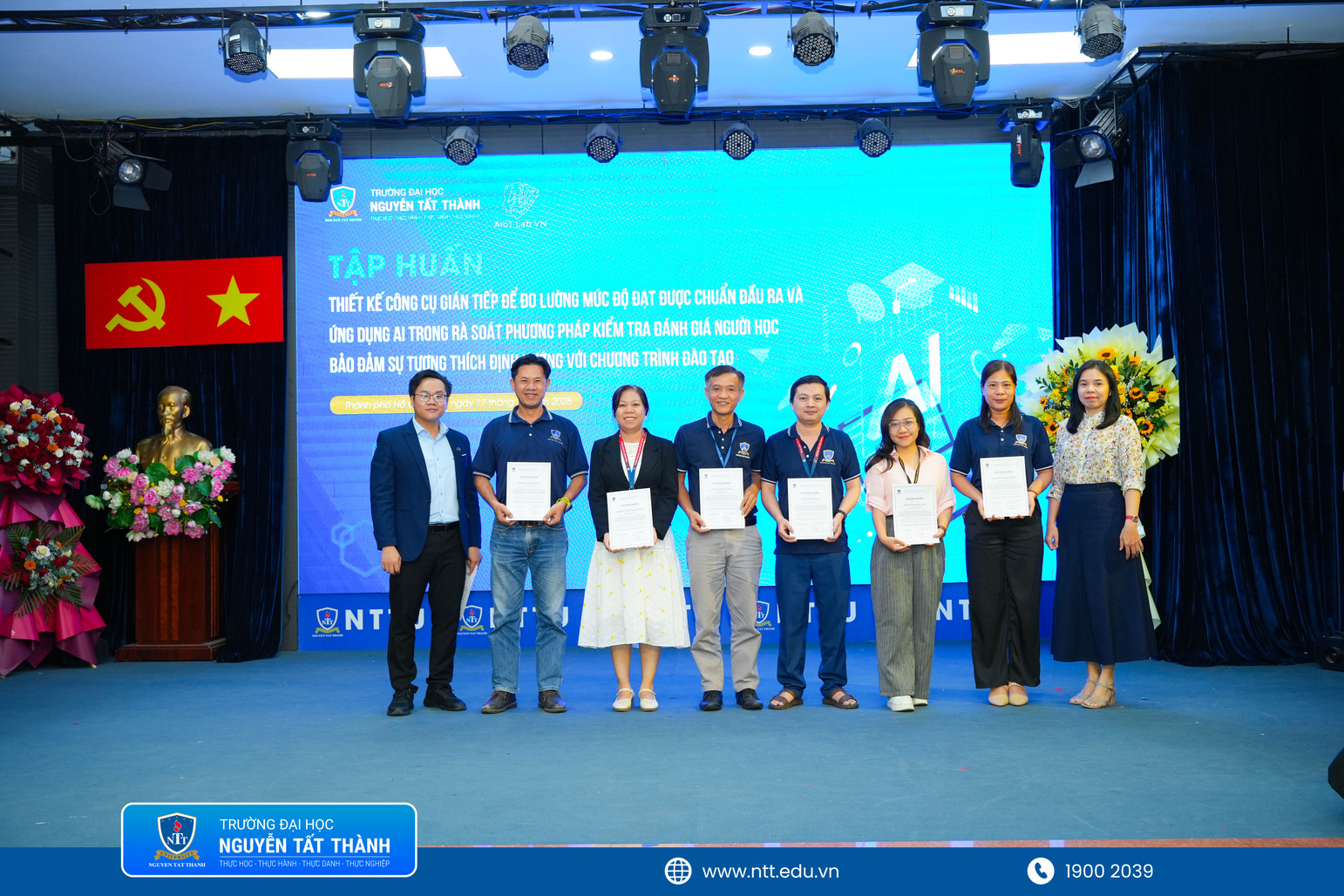
On October 17, 2025 , the faculty of the Business Administration Department participated in the training program “Designing Indirect Tools to Measure the Achievement of Learning Outcomes and Applying AI in Reviewing Student Assessment Methods” organized by the Testing Center. This was a valuable opportunity for us to update our knowledge and modern teaching methods, aiming to improve the quality of training at the Business Administration Department.
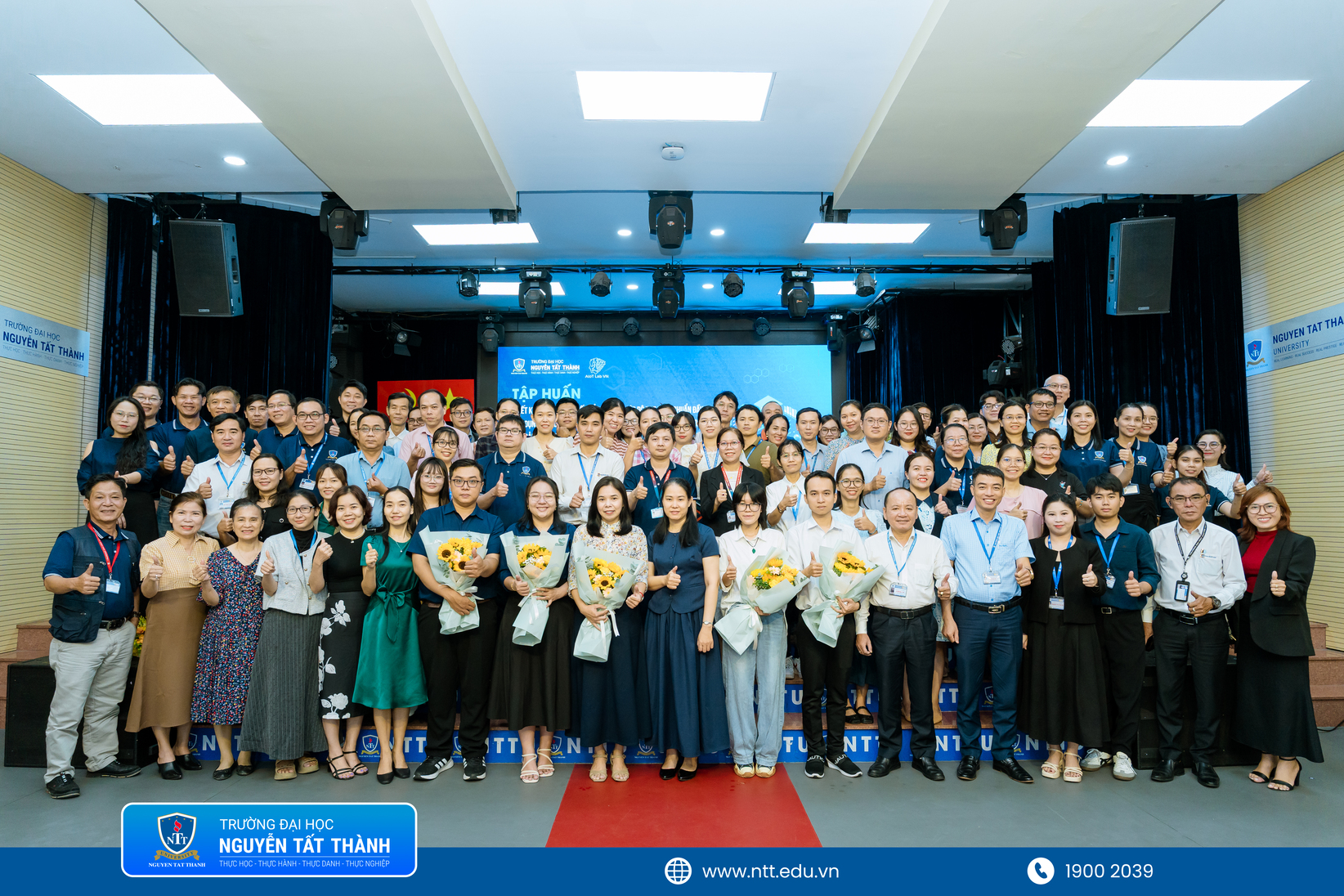
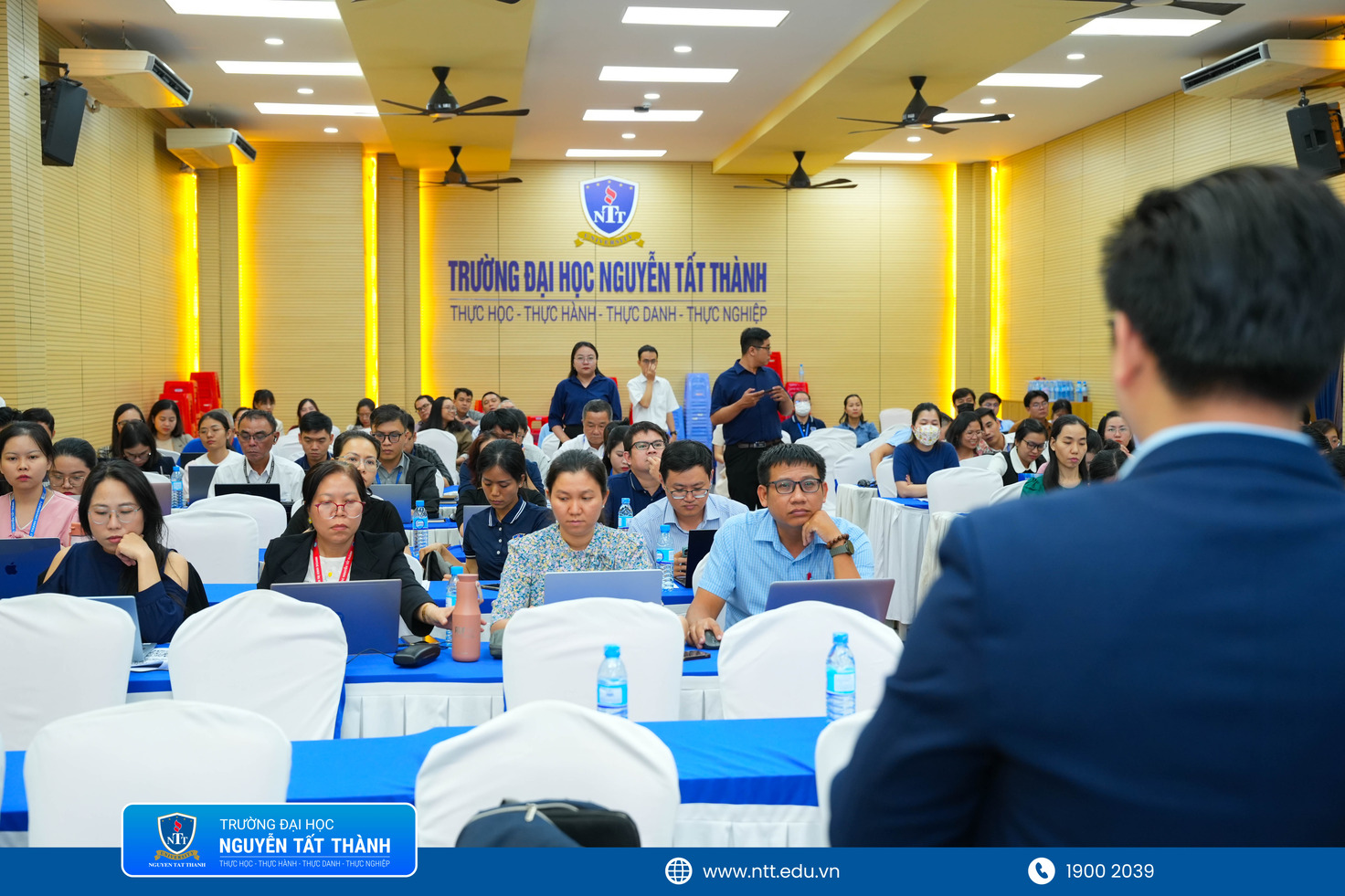
A lively atmosphere with over 160 lecturers in attendance.
The program brought together over 160 lecturers and staff from 27 training and training support units across the university. This large turnout created a vibrant learning environment where lecturers from various disciplines exchanged and shared experiences on educational quality assurance activities.
Morning Session: From Theory to Practice
Output Standard Review – The Foundation for Improvement
The session began at 8:00 AM with an introduction to the objectives. What impressed us most was the systematic approach to reviewing learning outcomes. Associate Professor Dr. Huynh Kha Tu provided detailed guidance on identifying activities needing improvement based on the results of CLO (Course Learning Outcomes) and PLO (Program Learning Outcomes) assessments.
For the Faculty of Business Administration, mastering this method is particularly important. We can immediately apply it to evaluating courses to ensure students achieve the competencies required for the set learning outcomes.
Indirect Surveys – An Effective Feedback Gathering Tool
The guidance on indirect surveys opened up new perspectives for us. We learned how to design survey questions to gather quality feedback from students, businesses, and other stakeholders. This will provide the Faculty of Business Administration with valuable data to improve its training programs and better meet the practical needs of the labor market.
Group Practice – Apply Your Knowledge Immediately
The group practice session in the morning was an opportunity for us to immediately apply what we had just learned. Faculty members from the Business Administration Department collaborated to plan improvements for a specific course, engaging in lively discussions about how to measure and enhance teaching quality.
Afternoon Session: Exploring the Potential of AI in Education
AI in Testing and Assessment – Saving Time, Increasing Efficiency
The afternoon opened a whole new chapter with Dr. Le Duy Tan introducing AI applications in education. We were guided on how to use AI to:
- Design a diverse assessment question bank.
- Analyzing student learning outcomes
- Create a detailed and objective evaluation rubric.
These are tools that the Faculty of Business Administration can immediately apply to reduce administrative workload and focus more on improving the quality of teaching content.
AI in Teaching and Learning – Personalizing the Experience
The guidance on applying AI to improve teaching methods has sparked many creative ideas. We see enormous potential in using AI to:
- Design case studies and practical exercises tailored to each group of students.
- Create interactive learning content.
- Analyze and adjust teaching methods based on real-time feedback.
AI in Output Standard Review – Process Optimization
The latter part of the afternoon focused on applying AI in reviewing and improving learning outcomes. This is particularly useful as the Faculty of Business Administration needs to regularly update its training programs to keep pace with the rapidly changing business environment and enterprise requirements.
Dedicated Team of Experts
We are extremely grateful for the invaluable guidance of:
- Prof. Dr. Huynh Kha Tu: With in-depth knowledge of educational quality assurance.
- Le Duy Tan: Providing a practical perspective and applications of AI technology.
Both speakers were very open to answering questions and sharing practical experiences, helping us gain a deeper understanding of how to apply the knowledge to our daily teaching work.
Abundant Resources for Continued Learning
The Testing Center has shared all the documents via Google Drive, including:
- The slides present updates from both speakers.
- Supplementary document on assessment linked to the Digital Competency Framework
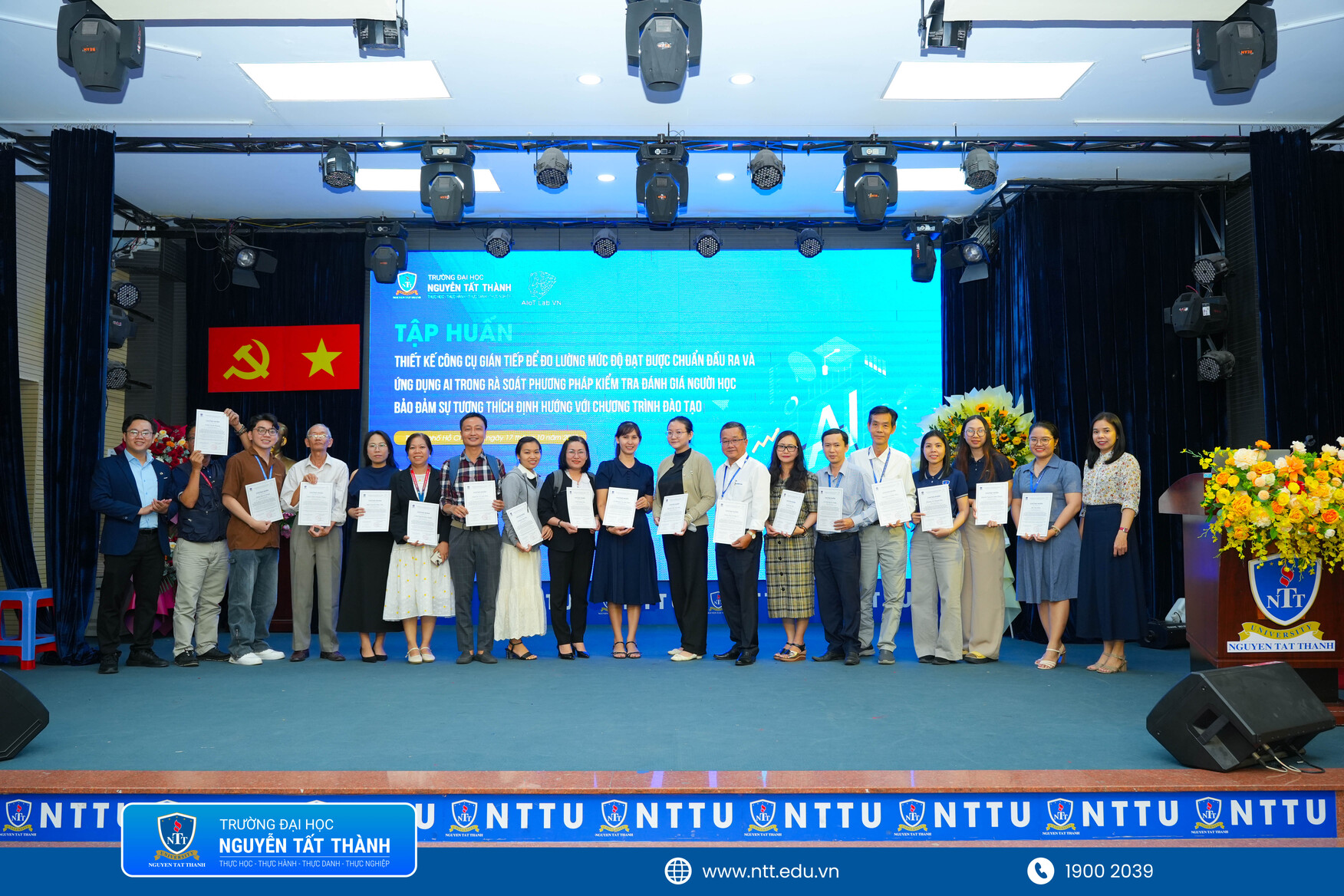
- Commemorative photo from the program.
These documents will be a valuable reference source for us to further study and apply to our teaching practice at the Faculty of Business Administration.
Implementation Plan at the Faculty of Business Administration
Following the training program, the Faculty of Business Administration will develop the following plan:
- Internal sharing session: We will organize a thematic meeting where faculty members who participated in the training will share their knowledge and experience with all faculty members in the department.
- Establish a pilot group: A group of faculty members will pilot the application of AI tools and new methodologies in designing and evaluating several key course modules.
- Review of learning outcomes: We will review the learning outcomes of the modules and training programs based on the methods used, ensuring they are up-to-date and relevant to practical requirements.
- Building question banks and rubrics: Applying AI to build detailed question banks and assessment rubrics for specialized subjects.
- Record keeping: All implementation activities will be documented and archived for inspection and quality assurance purposes.
Things We Learned
After a day of training, we learned some valuable lessons:
Regarding assessment : Assessment is not just about grading, but a continuous process aimed at improving the quality of training. Using both direct and indirect assessment methods will provide a comprehensive picture of how well students meet the learning outcomes.
Regarding AI : AI doesn’t replace instructors, but rather serves as a powerful tool to help us optimize our time and improve the quality of our work. The important thing is knowing how to use AI intelligently and responsibly.
Regarding improvements : Improvements must be based on data and concrete evidence from evaluation results, not just on subjective feelings. Each improvement activity needs a clear plan and an effective monitoring mechanism.
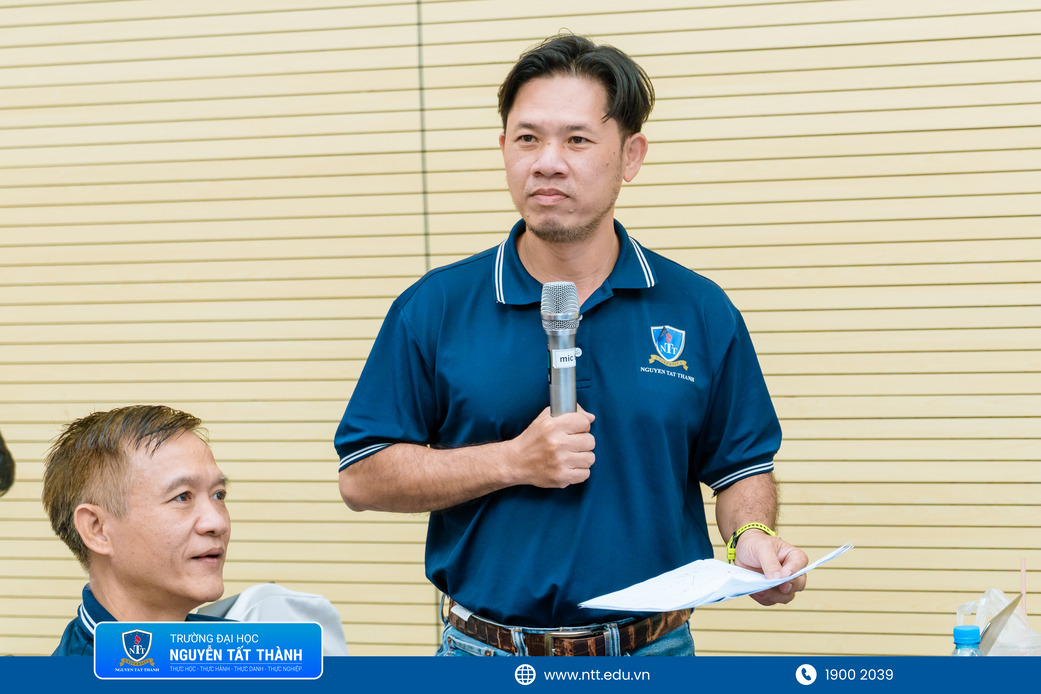
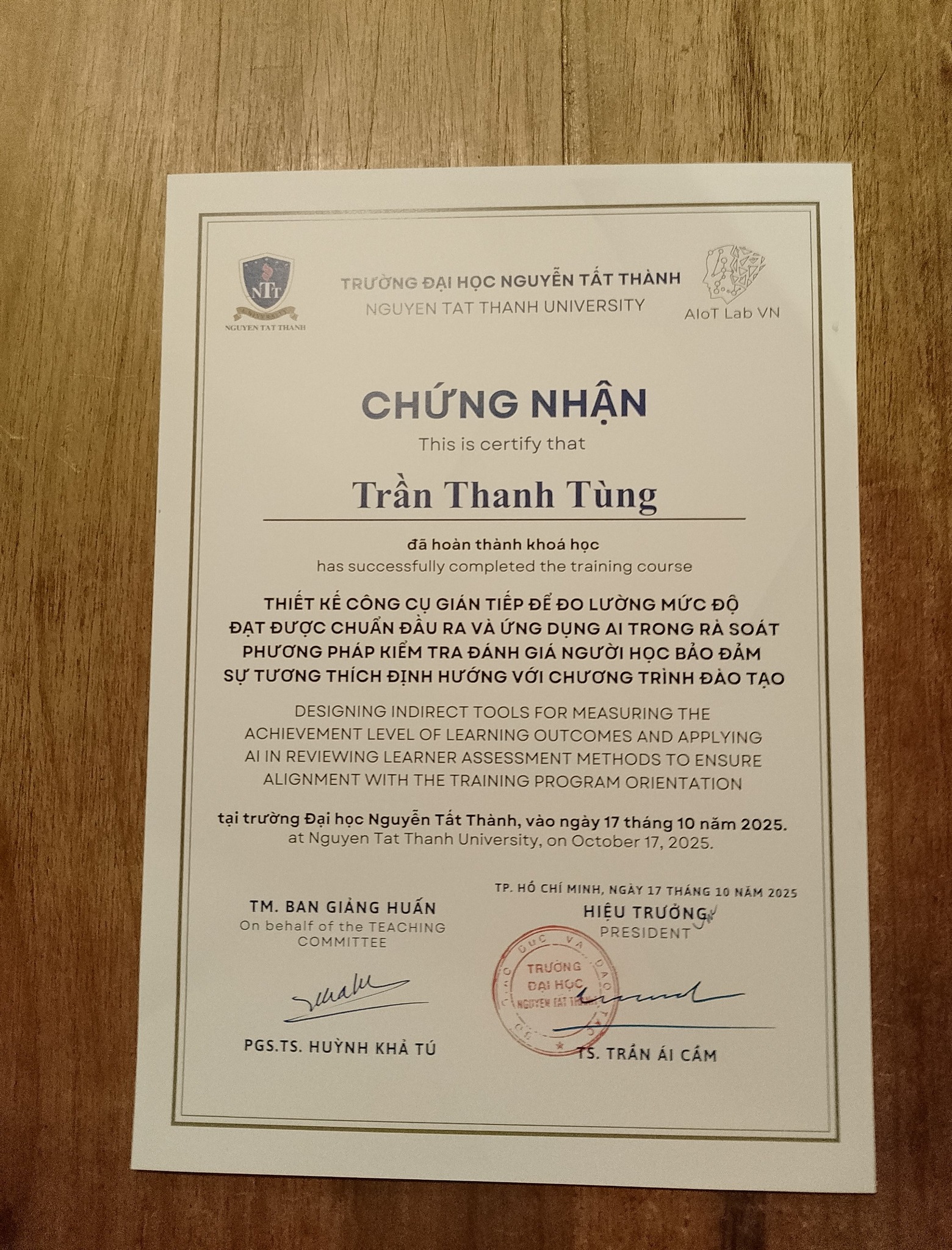
Some photos from the training session.
The Faculty of Business Administration would like to express its sincere gratitude to:
- The Testing Center organized a high-quality and meaningful training program.
- Associate Professor Dr. Huynh Kha Tu and Dr. Le Duy Tan took the time to share their valuable knowledge and experience.
- The school administration has shown interest and created favorable conditions for the faculty to participate.
We believe that the knowledge and skills gained from this training program will contribute to improving the quality of training in the Faculty of Business Administration, producing students with solid capabilities who can effectively meet the demands of the labor market and society.
Faculty of Business Administration,
Nguyen Tat Thanh University